

The early Hart of the NHRA
Don Garlits and Darrell Gwynn; their lives in words and photos in new books

Random ramblings and rumblings, the sequel
Random ramblings and rumblings
Memories of Englishtown
-
Remembering Steve Ambrose
Right back where we started from: Winternationals is back at No. 1
Meet Larry Wood: The man whose designs launched a million hot rod dreams
Can you imagine a toymaker designing your Top Fueler? 'Snake' and 'Mongoose' could
For the love of old drag racing photos
The ultimate Funny Car winners quiz
Still popular after all these years: Catching up with fan favorites Eddie and Ercie Hill
Eddie Hill, the early years
55 years ago, Don Garlits forever changed the look, feel, and future of Top Fuel racing
On a roll: A look at some all-time great NHRA Drag Racing success streaks
- ad
NHRA's Top 75 Moments: Bernstein, 'Big,' and Shirley reflect on making history
Funny Car set to turn 1,000: A look back at the milestone races along the way
Beyond the Top 75s ...
Wait ... Jim Head was in a 1960s surf band promoted by a drag racing legend? Yep.
More Martin memories
The Popular Hot Rodding Championships put U.S. 131 in the national spotlight
Friends we lost in 2025
Re-telling NHRA history: The 75th anniversary book and other special projects
It was John Force's world, and we were all thrilled to be living in it
The Joyce of Drag Racing Photography
- ad
Two legends: 'Big' and Bakersfield
When did we start doing that? Tracking some of the biggest changes in our sport
From 10-time dominators to one-time winners, a history of Indy Top Fuel champs
Legend to legend: Don Prudhomme on Don Garlits, Indy, and other great takes
NHRA Rookies of the Year: A look back at where some fabulous careers began
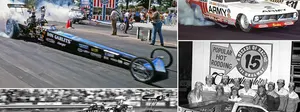
The Popular Hot Rodding Championships put U.S. 131 in the national spotlight
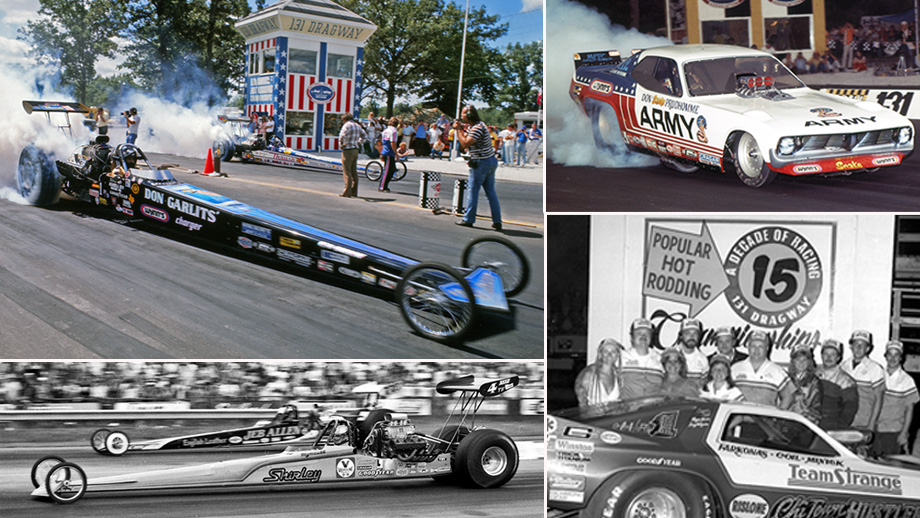
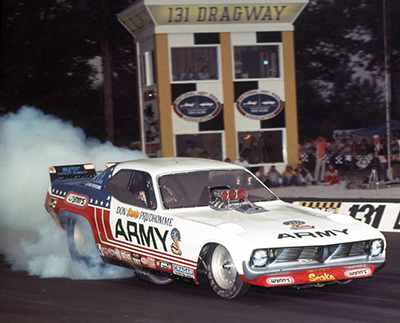
The news that NHRA would be hosting its first national event at U.S. 131 Motorsports Park in Martin, Mich., thrilled me to the bone. Back in the days when major match races equaled and sometimes even outshined certain national events, there were a notable few that stood out, including the famed March Meet in Bakersfield, the huge Manufacturers Meet at Orange County International Raceway, and the Popular Hot Rodding Championships at U.S. 131 Dragway, as it was known at the time.
It was always a race and a track that I dreamed of attending, and although the PHR Championships (colloquially called the "Pop Rod Meet" by the racers) ended decades ago, the memories live on for many of us, so I thought I’d take a deep dive into the history of that hallowed event to set the stage for the NHRA Great Lakes Nationals this September. I was fortunate to be able to source a Todd Veney-authored NHRA National Dragster article from our 2000 Readers Choice issue that allowed me to find quick recaps from each year, and the great Steve Reyes, who worked at PHR during those days, was kind enough to send me a huge selection of images from the event, which I combined with some from our own archives. Thanks, guys!
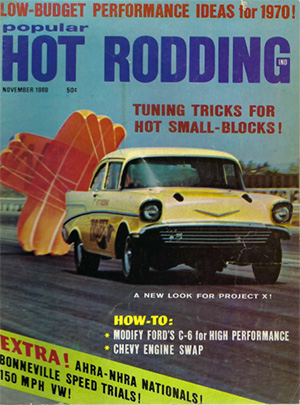
The Popular Hot Rodding Championships launched in 1969 as a collaboration between track owner John Grivins, a former Stock eliminator racer who built the facility in 1961, and the staff at Popular Hot Rodding magazine, produced by Argus Publishing, which at the time was fighting the dual-headed Petersen Publications behemoths of Hot Rod and Car Craft for hot rodders’ eyeballs.
With a location off the U.S. 131 highway halfway between the Michigan cities of Grand Rapids and Kalamazoo and equidistant between Detroit and Chicago, it had a lot going for it, and the event drew the sport’s biggest stars, including Don Garlits, Shirley Muldowney, Don Prudhomme, and others.
“We had wonderful crowds there at that race,” Garlits told me earlier this week. “I loved John Grivins. He was a super guy and one of my heroes. It was the most prestigious race you could win outside of one of the big associations’ national events, and it was bigger than a lot of the other associations’ so-called national events. It was the biggest independent race going — the only race that ever exceeded it at the time was the U.S. Fuel and Gas Championships at Bakersfield — and for an independent race like that to have such prestige and fill the stands completely up and have competitors come from all over the United States, it was a really nice race, and we loved racing there.”
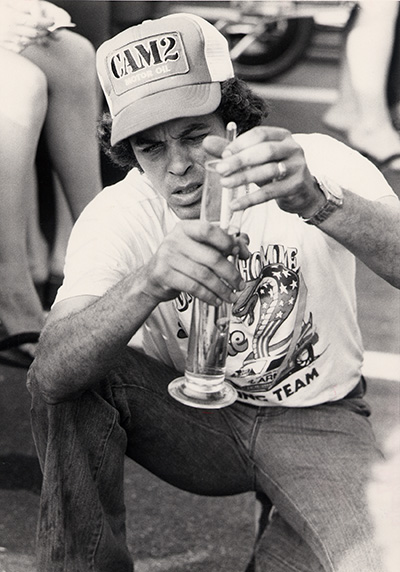
"That track could handle everything you had; it was the best," agreed Prudhomme. "We couldn't wait to go there. It was real racing; the reason I have a name today is because of places like Martin, Mich., and all the places that we used to run. It was the place to perform because if you did good there, the rest of the tracks in the country would hear about it and want to book you because you won the Popular Hot Rodding race."
The event, held each August just weeks before the NHRA U.S. Nationals and highlighted by a Saturday night Funny Car show, was a standout through the 1970s before tapering off in the early 1980s due in part to NHRA’s growing national event schedule, and actually became a bit of a sideshow to Division 3 points meets and concluded its run in 1982 and 1983 as one of two half-points bonus events for the Pros (the other being the Super Stock Nationals at Maple Grove Raceway).
1969
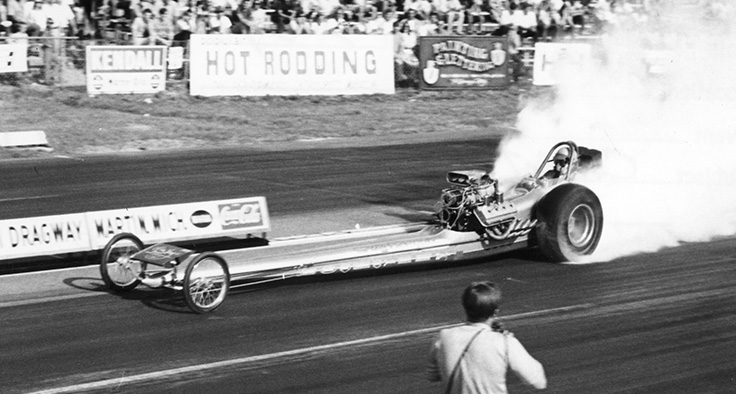
Steve Carbone, who would go on to win the NHRA world championship that year by winning the Dallas-based NHRA World Finals, won Top Fuel at the first PHR race, wheeling Bob Creitz's 392-powered machine. "Fearless Fred" Goeske broke some Midwest hearts by beating Pat Minick in the Chi-Town Hustler on a holeshot in the Funny Car final, 7.71 to 7.52.
1970
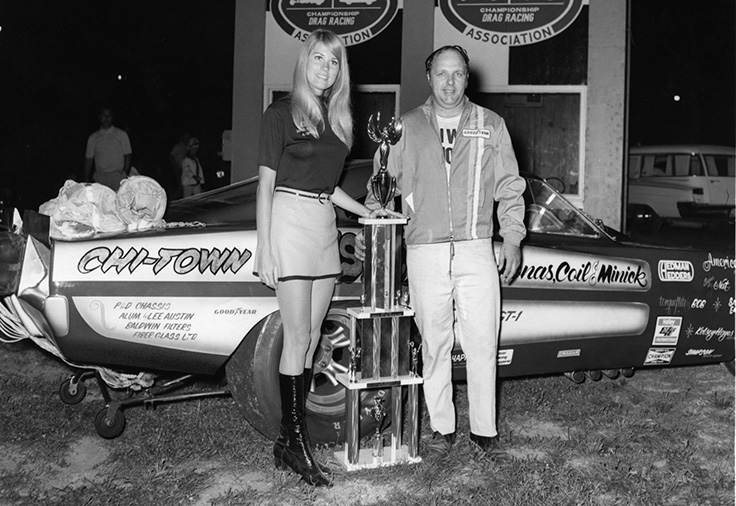
The success of the inaugural event led to a turn-away crowd the next year (police actually had to seal off access to U.S. 131 on Saturday night), where Minick, Austin Coil, and the Chi-Town Hustler redeemed themselves with a victory.
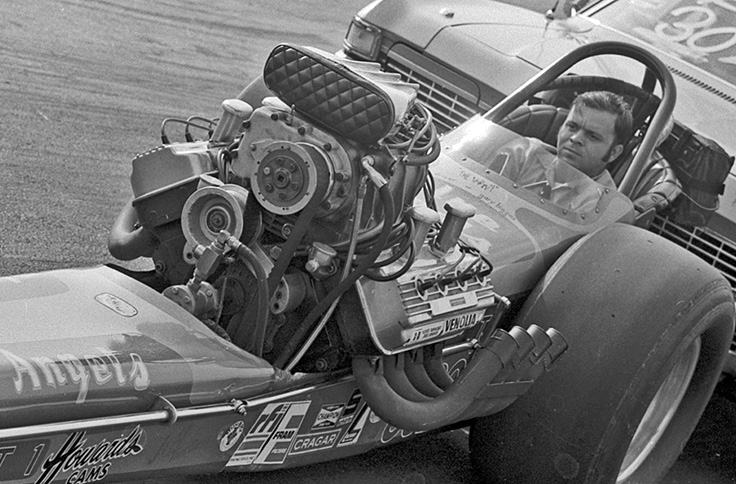
Top Fuel honors went to unheralded Gary Biggins in the Blue Angels dragster, who won the final on Richard Tharp’s red-light. Biggins had reached the final by upsetting red-hot Jim Nicoll, whose 1970 future included the low of a wild, clutch-exploding final-round loss in Indy and the highs of being named Drag News’ Top Fuel Driver of the Year.
In another upset, home-state hero Mike Fons won Pro Stock over Dick Oldfield and the Motown Missile.
1971
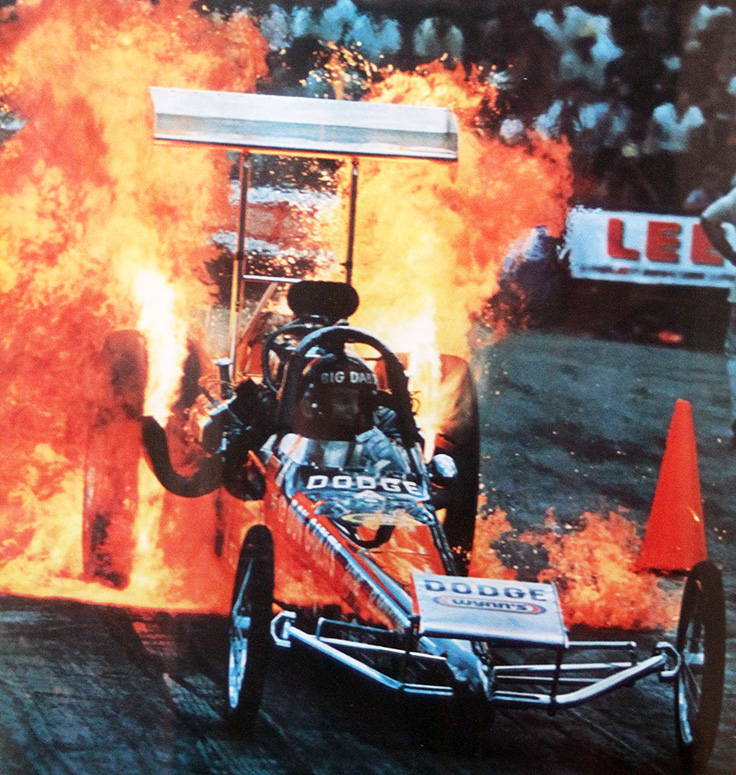
Like pretty much everything else that happened in Top Fuel in 1971, Don Garlits was the star of the PHR race, wheeling his revolutionary, NHRA Winternationals-winning Swamp Rat 14 rear-engine dragster to victory after posting the sport’s first 6.3-second runs. Doing a massive fire burnout didn't hurt his popularity either. Don Prudhomme and Tom McEwen were both in their first rear-engine cars, too, and qualified No. 2 and 3 behind “Big.” (“The Snake” and “the Mongoose” were also competing in Funny Car at the event.)
Garlits actually red-lighted in round one to Indiana’s Dick Carnett, but he got back in on the break rule when Carnett couldn’t make the second-round call. The final was a precursor to that year’s famed “burndown” final in Indy as Garlits drove around Steve Carbone’s holeshot to win with a 6.38.
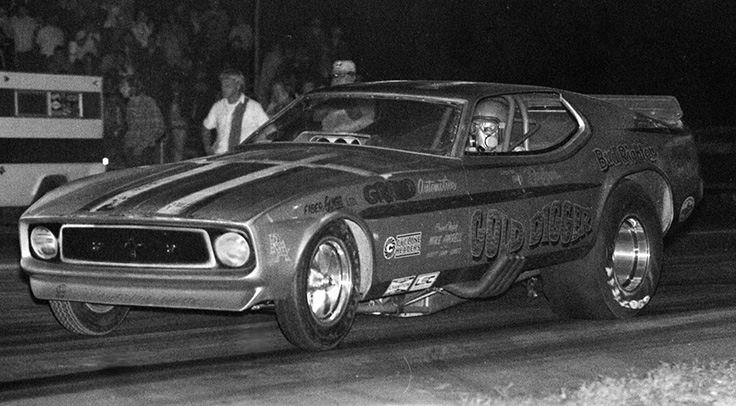
Gary Bolger, who would go on to greater fame with the Creasy family’s cars, drove the Gold Digger Mustang to the Funny Car victory, defeating Prudhomme in the semifinals and the Tharp-driven "Blue Max” in the final. Don Carlton won Pro Stock in the Motown Missile when "Dyno Don" Nicholson red-lighted.
1972
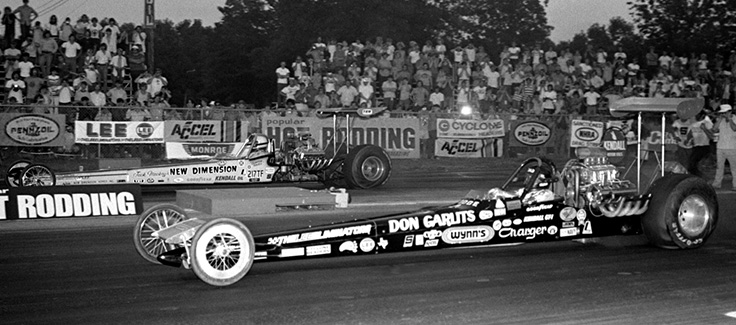
Clayton Harris, one of Garlits’ greatest rivals in the early 1970s, won the 1972 Top Fuel crown, posting a stunning low e.t. run of 6.15 in Jack McKay's New Dimension Homes dragster, then defeated "Big Daddy" in the final with a 6.17.

PHR success continued to elude Prudhomme when he fell to longtime friend Roland Leong’s Leroy Chadderton-driven Hawaiian in the fog-delayed Saturday night final that actually ran at 8:30 a.m. Sunday ahead of that day’s show. "The Snake" red-lighted to Chadderton, and both teams quickly hit the road for Sunday afternoon match race commitments elsewhere.
“Dyno Don” settled for Pro Stock runner-up honors for the second straight year after dropping the round to the "California Flash," Butch Leal.
1973
In what proved a preview of the upcoming U.S. Nationals, Gary Beck won Top Fuel, and Prudhomme finally won Funny Car at the PHR meet.
Beck conquered a 40-car field that sported a 6.55 bump spot that, stunningly, was too quick for Garlits, who was suffering through clutch slippage issues. Beck defeated recent Montreal winner Pat Dakin in the final. Low e.t. went to Chevy-powered Jim Bucher, who ran a 6.12.
Prudhomme got a bye run in the Funny Car final after Pat Foster lit up the feared Barry Setzer Vega — which earlier had low e.t. of 6.38 — in a fiery semifinal victory over McEwen.
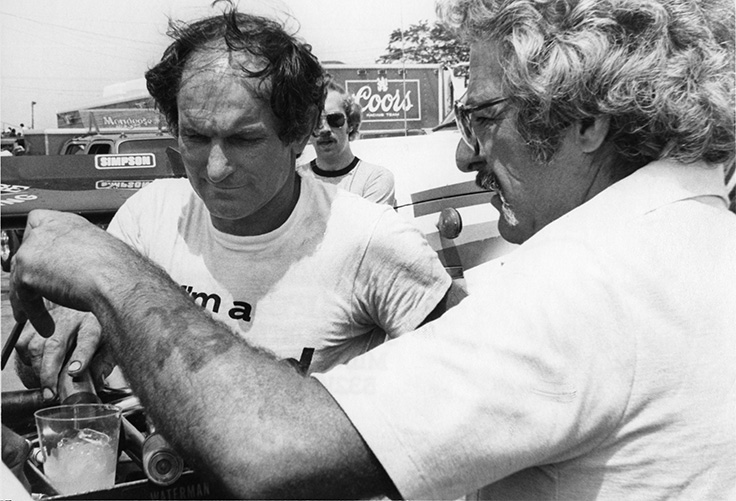
(Side note: Garlits shared with me the details of this year’s race. He had just installed a new Hays clutch but had not been notified that the disc surface had been changed from previous models. Although he had already well exceeded the minimum number of runs upon which his appearance fee was based, he wasn’t ready to give up.
(“I was always off just about maybe five-hundredths of a second, and it was about midnight, and I was getting ready to make another run. And John [Grivins] came over and said, ‘Don, you have made 10 runs here today. For me, nobody has ever done that many runs in a day. For me, please don't make any more runs. We don't want anything to happen to you. Come on over to the pay shack and get your check.'
“Frank Carstensen from Hays said he’d take the clutch back to Hays and get it fixed up, but I told him I would fix it myself. I went down to the hardware store and bought some quarter-inch bolts, about two inches long, and I put them on the counterweight arms and filled them up with the little donuts. And the next race was at Maple Grove, and with that weight on that clutch, that son of a bitch went 6.10 down first run, and the field was like 6.40. I laughed my ass off on that one.”)
1974
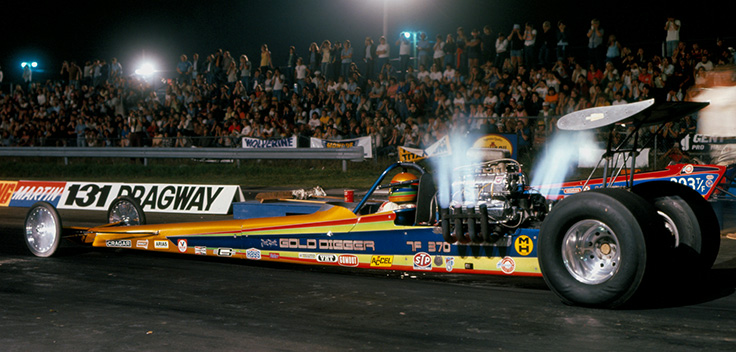
Like 1971 Funny Car winner Gary Bolger, 1974 Top Fuel champ Billy Campbell was driving a car named Gold Digger, upsetting Dave Settles and the vaunted Candies & Hughes dragster in the final.
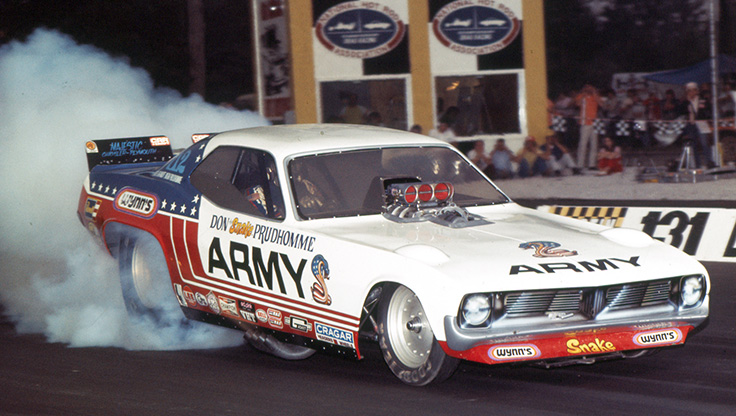
As they would also do in Indy again, Prudhomme and Bob Brandt won Funny Car again, this time wheeling the U.S. Army-backed Barracuda past the Chi-Town Hustler team and new driver Ron Colson. Prudhomme clocked a shutoff 6.49 but stayed in front of Colson, who powered his way through a pair of wild wheelstands.
Another Michigan Pro Stock hero, Wayne Gapp, won Pro Stock in the four-door Gapp & Roush “taxi” Maverick, besting Bobby Yowell in “Billy the Kid” Stepp’s entry.
1975
Dale Funk won Top Fuel at the 1975 event, where Garlits showed he was closing on the 250-mph barrier he would break at year’s end with a blast of 249.30 mph. Garlits broke a spark plug in the semifinals and lost to Gary Read and the Bill Schultz-tuned C.C. Dunn & Co. dragster, who then lost the final to Funk.
Prudhomme won Funny Car for the third straight year, winning with a strong 6.12 in the U.S. Army Monza. Like Garlits, a few months later, he would break a barrier at the NHRA World Finals — the first five-second pass.
1976
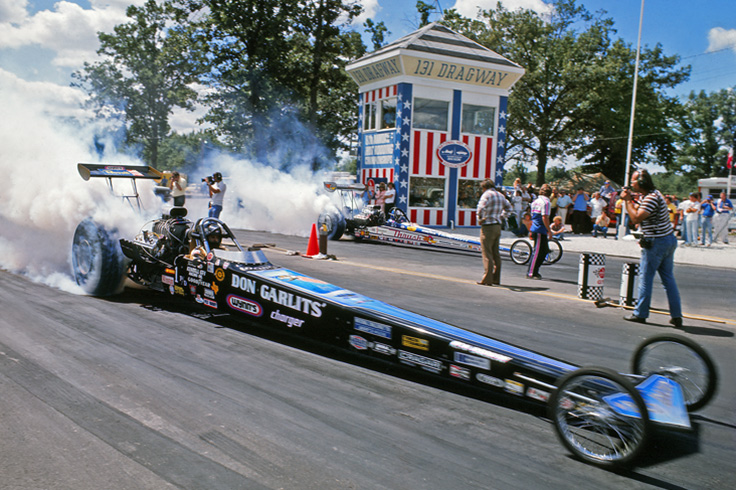
Five years after his last win there, Garlits was back on top at the Pop Hot Rod race thanks to eight straight five-second passes. It was a weird year for Garlits, who, after winning the 1975 NHRA Top Fuel crown, didn’t run any NHRA national events in 1976, but he did win the PHR race, besting John Wiebe in the final round.
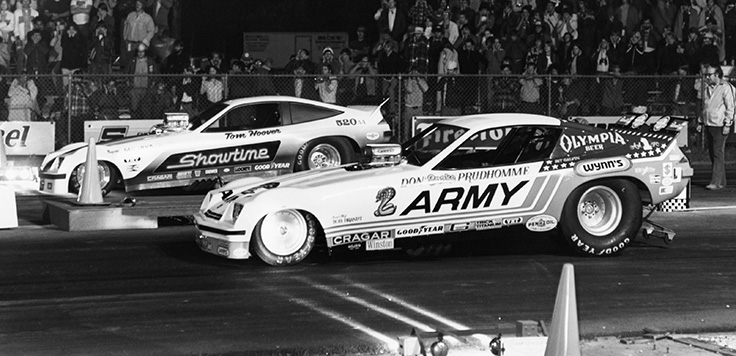
Another year, another PHR Funny Car trophy for Prudhomme and his vaunted Monza. His 6.13 shutoff qualifying was two-tenths quicker than the No. 2-ranked Bolger. Only Tom Hoover came close to stopping him in round two, but fell 6.24 to 6.25, and in the final, Prudhomme beat rookie Rick Johnson in Bill Schifsky's Bear Town Shaker.
Taking advantage of a favorable weight break, Wally Booth won Pro Stock in his AMC Hornet as a springboard to winning the season’s three final NHRA national events: Indy, Seattle, and Ontario.
1977
Prudhomme’s Funny Car monopoly ended this year with a first-round loss to Gary Burgin, and it should have been Dale Pulde and Mike Hamby in the winner’s circle after their War Eagle Trans Am ran 247.93 mph, the fastest pass ever for a Funny Car and faster than every Top Fueler on the grounds, and a 6.00 e.t. that barely missed making Pulde Funny Car's third five-second driver (behind Prudhomme and Raymond Beadle), but the War Eagle smoked the tires in the final against Burgin.
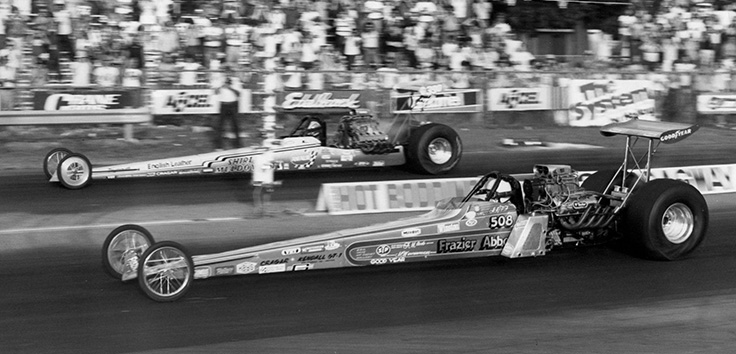
Muldowney, who would go on to win her historic first Top Fuel championship, beat Garlits in the semifinals but slowed from a 5.81 on that run to a 6.03 in the final and lost on a holeshot to Johnny Abbott’s 6.10 in the Frazier & Abbott dragster.
1978
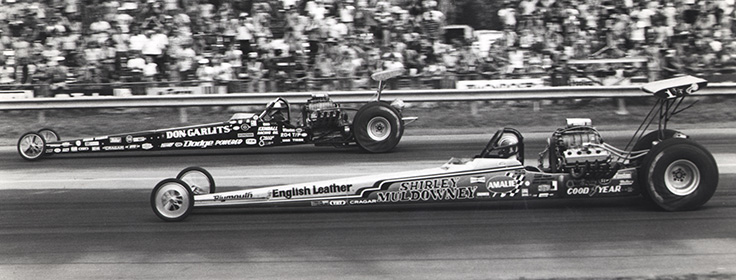
Garlits was back on top in Top Fuel again and topped Abbott from becoming a two-time PHR winner in the final round. Garlits, who ran 5.91 low e.t. earlier in the event and shown here in another duel with Muldowney, won the final easily with a 6.09 after Abbott's transmission broke in the Jet-X dragster.
Prudhomme also was back at the top of the heap in Funny Car, this time stopping Billy Meyer's Aqua Slide N Dive Arrow in the final with a 6.10.
1979
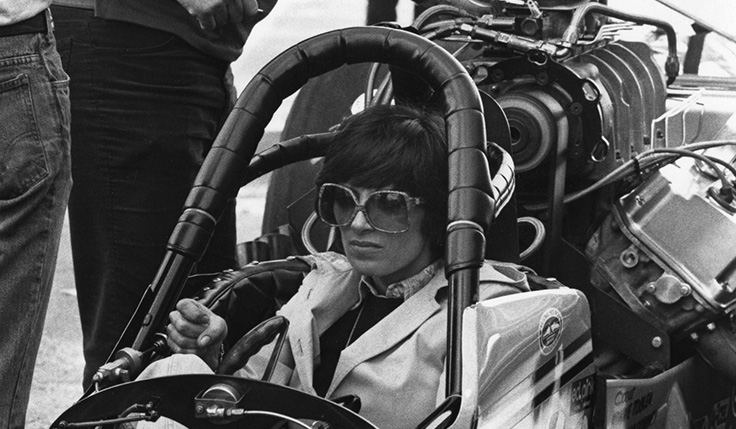
Muldowney finally won Top Fuel, a rare bright moment for the superstar who went winless on the NHRA national event circuit from the 1977 Montreal event to the 1980 Winternationals.
Prudhomme won his sixth PHR Funny Car title in seven years, defeating the always-there opposition afforded by the Chi-Town Hustler team, this time with Pete Williams in the saddle. Prudhomme scored with a 6.24 after Williams broke just off the starting line.
Larry Lombardo, at the wheel of Bill Jenkins' Camaro, survived a shutdown area spinout after a flat tire early in the event and won Pro Stock.
1980
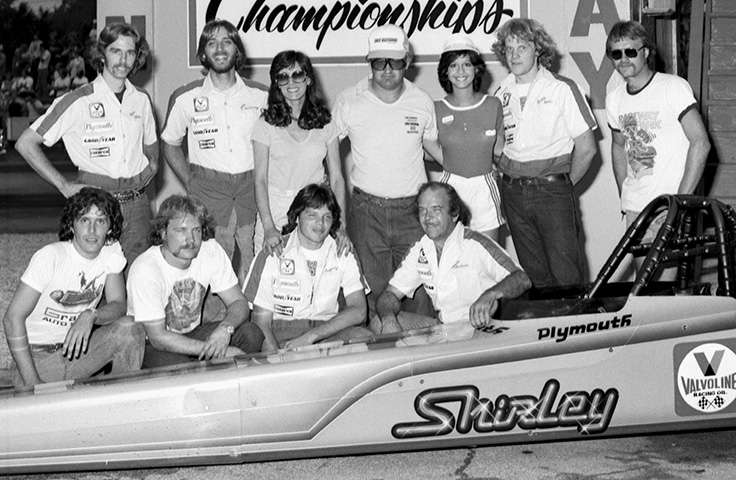
En route to her second world championship, Muldowney won Top Fuel again, but only after rebounding from a near crash after the right-rear wheel studs sheared off at half-track on a qualifying pass, and she plowed into the grass, damaging the front end. Her crew borrowed front tires from Garlits and Jeb Allen and a rack and pinion unit from Connie Kalitta. Twenty-two cars tried to make the eight-car field, led by Garlits’ 5.95, but Muldowney took it to her greatest rival in the final round on a 5.962 to 5.961 holeshot.
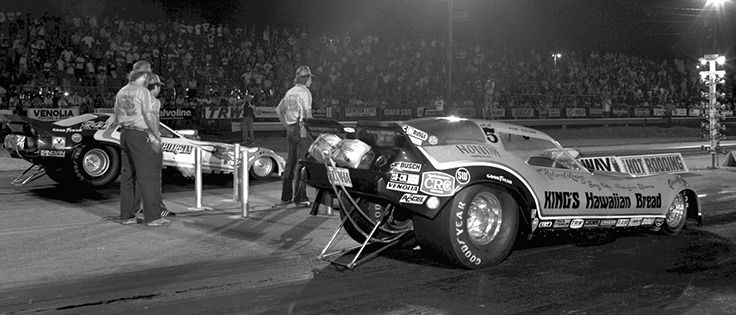
Colson was back in the Funny Car final for the first time since 1974, but now he was behind the wheel of Leong’s King’s Hawaiian Bread Corvette, and Leong, one of the sport’s staunchest and most prolific match racers, brought home the dough with a victory over tire-smoking Burgin.
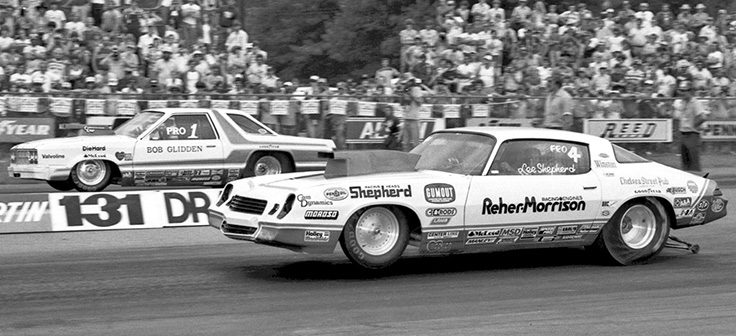
Glidden was the king of Pro Stock again, avenging a final-round loss in Montreal a week earlier by beating Lee Shepherd in the semi’s and then Jim Kinnett’s Plymouth in the final round.
1981
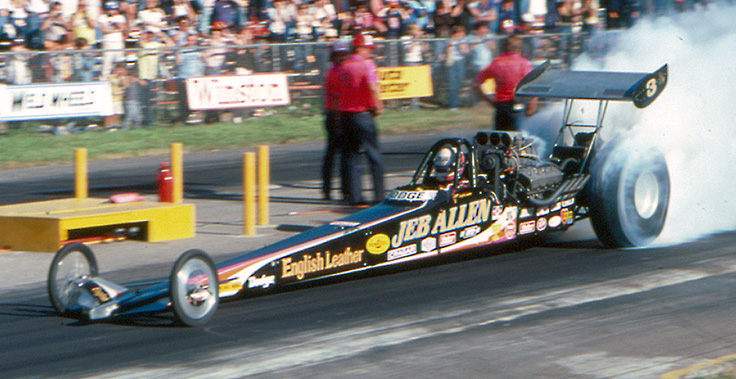
Eventual world champion Jeb Allen beat the Jim & Alison Lee team and driver Butch Osmon in a great Top Fuel final in which Allen’s English Leather rail ran 5.78 at 250 mph (top speed) to hold off Osmon’s 5.81. Connie Kalitta had low e.t. at 5.72.
Kenny Bernstein won Funny Car in the Budweiser King Omni, interestingly, winning the final round over his future crew chief, Dale Armstrong, who was unable to make the final-round call in Mike Kase’s Speed Racer entry.
Lee Shepherd won Pro Stock after taking down Andy Mannarino, who debuted a trick new small-block Oldsmobile engine, on an 8.429 to 8.423 holeshot in the final round.
1982
Every track record fell in the 1982 edition, headlined by Gary Beck, who wheeled Larry Minor’s dragster to a 5.65, then almost matched it in the final round with a 5.67 to defeat Jody Smart. A few weeks later, Beck would shatter the 5.50 barrier at the U.S. Nationals with a stupendous 5.48 clocking.
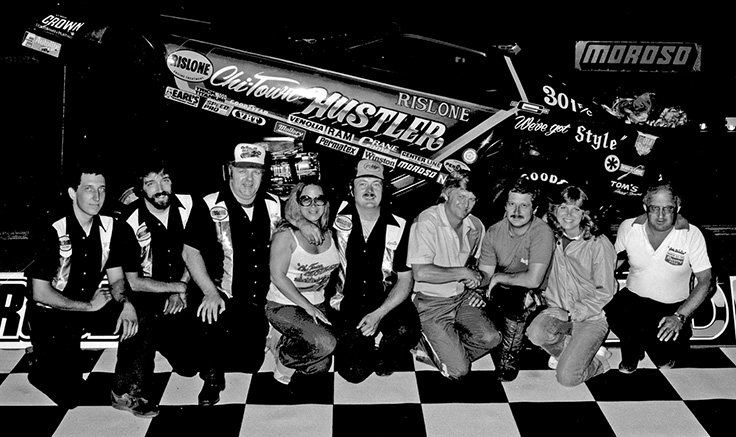
Frank Hawley, who would go on to win the NHRA Funny Car championship, got the famed Chi-Town Hustler team into the Pop Rod winner’s circle for the first time since 1970 when he bested reigning world champ Raymond Beadle and the Blue Max. Bernstein broke Pulde’s 5.98 track record with a 5.90 in qualifying.
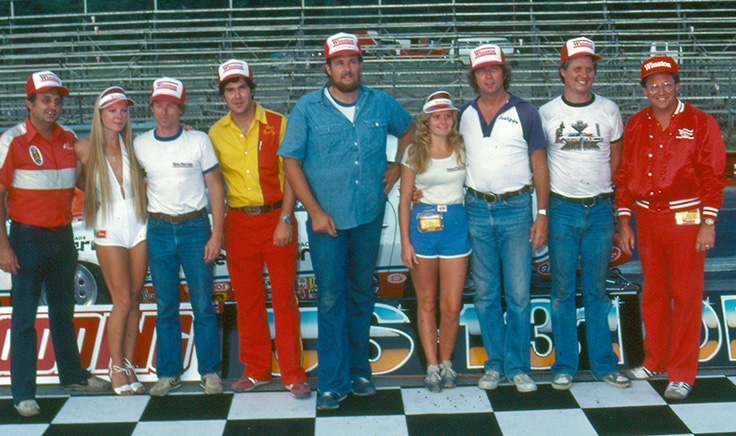
With the new 500-inch rule in play, the Pro Stock track record was destined to fall, and it did as Shepherd won Pro Stock again in dominating fashion, running a track-record 7.79 to qualify No. 1 then beat Frank Oacinio in the final round.
1983
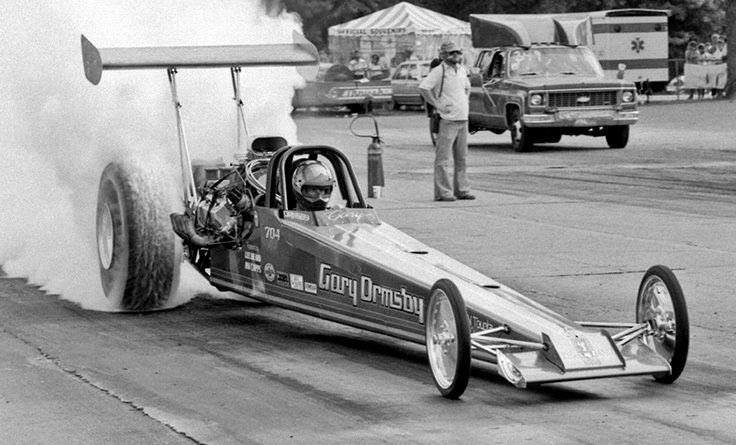
Gary Ormsby, who had raced in Top Fuel for decades before taking some time off, made a triumphant return with crew chief Lee Beard to win the event. G.O. defeated young Top Fuel pilot Scott Kalitta in the final with a 5.79 and would continue as one of the class’ best drivers throughout the decade, culminating with the world championship in 1989.
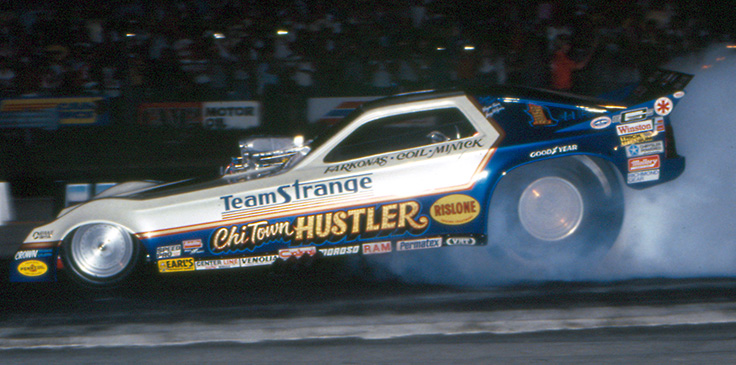
Hawley won Funny Car again en route to a second straight world championship, defeating Tom Hoover in the final round with a 5.99 at 247.93 (top speed) after running low e.t. of 5.86 earlier. The win earned him points necessary to expand his points lead to 1,300 markers ahead of Mark Oswald.

Frank Iaconio won Pro Stock over Warren Johnson, who was running his trick Hurst/Olds entry. Iaconio set the performance standard, too, with a pass of 7.65 at 183.29, both better than the existing national record.
At the height of its popularity, the Popular Hot Rodding Championships was far more than a match race — almost a mini national event in its stature and difficult to win. It was home to some of the biggest stars in drag racing and the site of many of the sport’s quickest and fastest runs, a tradition that should carry through as the famed track officially joins the NHRA national event schedule later this year.
Next week: More great Reyes photos from the Pop Hot Rod meet!
Phil Burgess can be reached at pburgess@nhra.com
Hundreds of more articles like this can be found in the DRAGSTER INSIDER COLUMN ARCHIVE
Or try the Random Dragster Insider story generator