

-
Weekend Rewind: 2026 Texas NHRA FallNationals
-
Five Things We Learned at the Texas NHRA FallNationals
-
After fourteen years, GT Tonglet returns to Pro Stock Motorcycle
-
Forty years later, Beckman has gone from fan to leading the Funny Car field in Dallas
-
First look at 2027 Pro Stock combination in Dallas exhibition passes
-
-
Langdon riding a four-race, 16-round win streak into Countdown's second half
-
Gaige Herrera eyes Pro Stock Motorcycle championship opportunity in Dallas
-
Funny Car’s Austin Prock thinking big for Texas-sized shootout
-
Top Fuel rookie Will Smith looks for dream weekend in Dallas
-
Plourd ready to complete bucket-list challenge with Las Vegas Top Fuel debut
-
From Dearborn to the dragstrip: Ford Racing's story began 125 years ago today
-
Behind the Scenes with the winners of the 2026 NAPA Auto Parts Midwest Nationals
-
Weekend Rewind: 2026 NAPA Auto Parts NHRA Midwest Nationals
-
Saturday in St. Louis: NAPA Auto Parts NHRA Midwest Nationals photo gallery
-
Could St. Louis bring out the best in Erica Enders once again?
- ad
-
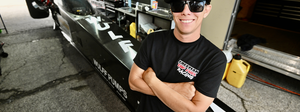
Cameron Ferre: Still chasing Top Fuel greatness, just on his own terms
-
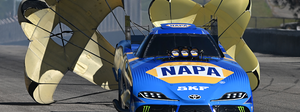
Ron Capps thinking big at NAPA Auto Parts NHRA Midwest Nationals
-
Top Fuel’s Shawn Langdon looking for fourth straight win of 2026
-
Behind the Scenes with the winners of the 2026 NHRA Nationals at The Rock
-
Weekend Rewind: The inaugural NHRA Nationals at the Rock
-
Five Things We Learned in Rockingham
-
New venues like Rockingham bring excitement for old pro Ron Capps
-
That was then, this is now: The Winston Invitational at Rockingham
-
After a near-miss in Michigan, Ingwersen and crew are more inspired than ever
-
Jordan Vandergriff relishes first opportunity to race at Rockingham Dragway
- ad
-
Behind the Scenes with the winners of the 2026 Dodge NHRA Great Lakes Nationals
-
Weekend Rewind: 2026 Dodge NHRA Great Lakes Nationals
-
Five things we learned from the Dodge NHRA Great Lakes Nationals presented by Mopar
-
Vandergriff and crew took aim at No. 1 in challenging Michigan conditions
-
Friday Photo Gallery- NHRA makes a monumental return to Michigan
Maddi Gordon: The interview
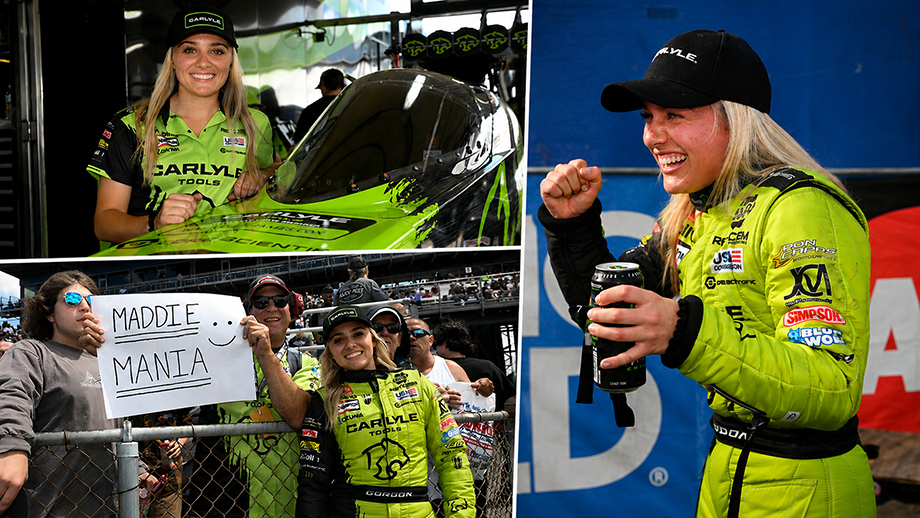
There’s little doubt that Maddi Gordon has quickly become the toast of NHRA Drag Racing. The third-generation racer from Paso Robles, Calif., has quickly been embraced by fans and fellow racers not just for her obvious driving skills but for her relatability and genuineness. She’s suddenly everyone’s favorite daughter, granddaughter, little sister, aunt, niece, or BFF.
Her Top Fuel win at the Summit Racing Equipment NHRA Nationals in just her 10th start in Top Fuel brought to a crescendo the noise that began building more than a year ago when three-time Funny Car world champion Ron Capps anointed her as the driver for his new Top Fuel operation.
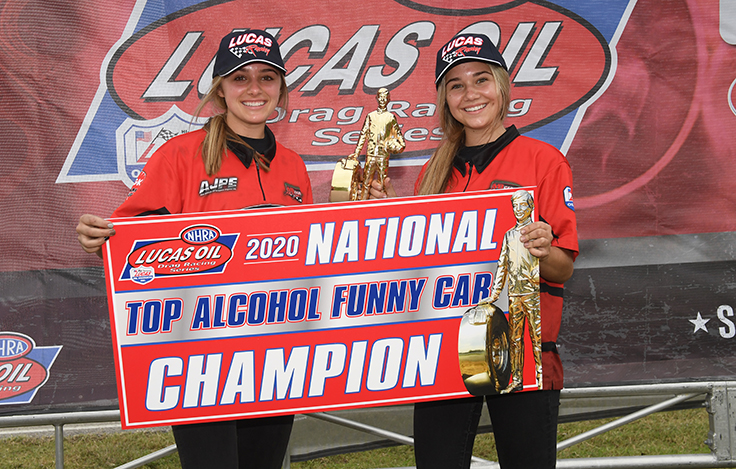
Few outside of the West Coast, where her father, Doug, and grandfather, Mike, had raced for decades, or those in Top Alcohol Funny Car pits, knew who she was, but those who knew, well, they knew. They had seen her and her sister, Macie, wrenching on the family car for years and then become breakout stars during the 2020 COVID-19 season, where, with schools closed, they traveled the country with their dad and family to race their Funny Car and won the world championship.
She hit the national radar in the summer of 2025 after taking over the family race car and becoming the 100th woman to win an NHRA national event at that year’s NHRA Northwest Nationals in Seattle. She’d go on to win two more national events, nab a West Region championship, and finish second in the world championship race before being offered the chance of a lifetime by Capps, a longtime family friend who’d seen her mature from the little girl he knew on family trips to the lake to a serious championship-caliber driver.
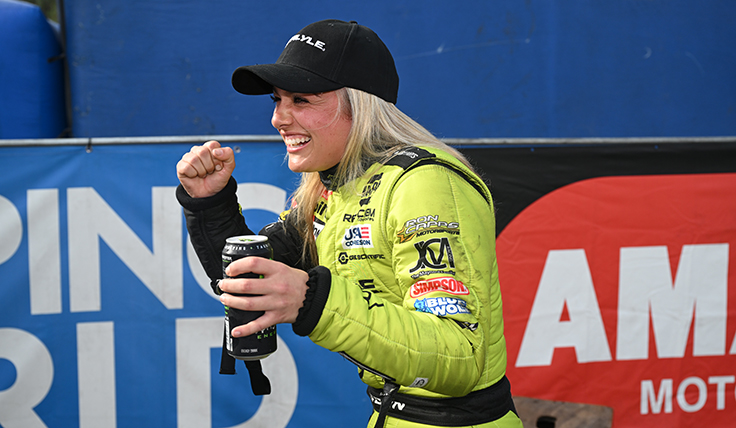
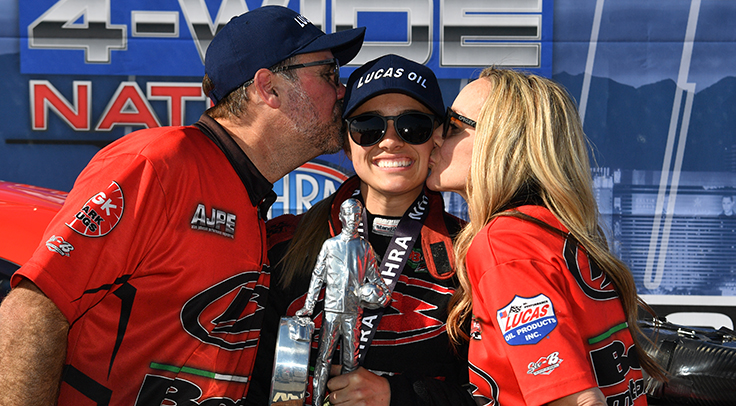
She has gone from being the respected hard worker toiling in the pits to the face of the Carlyle Tools brand as the driver of their venom green dragster. She reached the semifinals in her debut at the Amalie Motor Oil NHRA Gatornationals in Gainesville and never looked back, with the greatest highlight being the most recent, winning not only in Top Fuel — becoming just the 10th woman to win in the class — but winning alongside her father, Doug — just the fifth time a father and daughter have shared the victory stage as winners — but alongside team owner Capps, too.
It has been quite a ride, as Gordon admits in this exclusive interview, where she candidly talks about her road to the winner’s circle and all of the highs and lows along the way.
It's amazing how much your life has changed over the last five or six years. Has it been overwhelming?
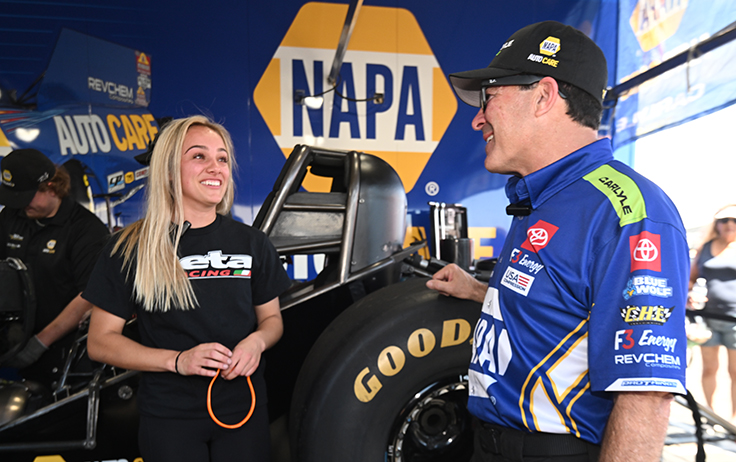
When we first came in to work on Dad's car in 2020, we were just Doug Gordon's daughters. People didn't really know our names. Then people started seeing us lifting engines out, putting the blower on with Dad, and suddenly, they were saying, "Wait a minute ... who are these girls?"
Walking into Gainesville this year, I honestly thought if I went to the alcohol pits, people would know who I was because that's where I came from. If I walked through the Top Fuel pits wearing a Carlyle shirt, maybe someone might recognize me, but surely nobody was going to approach me.
Then one person would come over, then another, then another, and suddenly I'd have a circle of people around me. Later, after we lost in the semifinals and it started raining, I came back out of the trailer and there were probably 30 people waiting outside our pit in the rain. I was absolutely blown away.
That wasn't on my radar. It wasn't something I ever thought I could achieve. I hope people see that and believe in themselves because you just never know what can happen.
Seems like your world really changed in Seattle in 2024 when you became NHRA’s 100th female winner and got a lot of media attention.
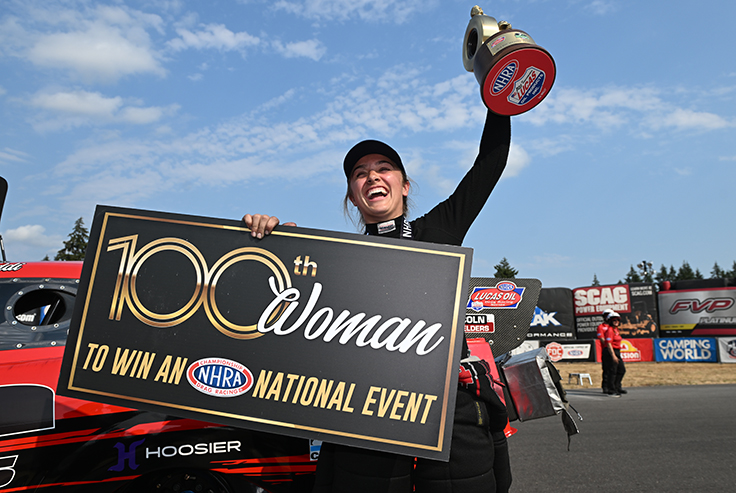
That was a huge turning point in my career. I knew it was a big deal, but I didn't realize how big until a week or two later when all the publicity started.
At sponsor appearances, we’d have Ron Capps listed with all his championships and wins, and then it would say "Maddi Gordon, 100th female winner." That was one of my earliest major achievements and something my family and I carved into the record books.
Does it ever feel like your life really isn't your own anymore?
It really has changed massively. I say it all the time: My life changed in January of 2026 when Ron approached me and my family, and it literally did. Everything in my life is different except where I live, and I'm hardly there either.
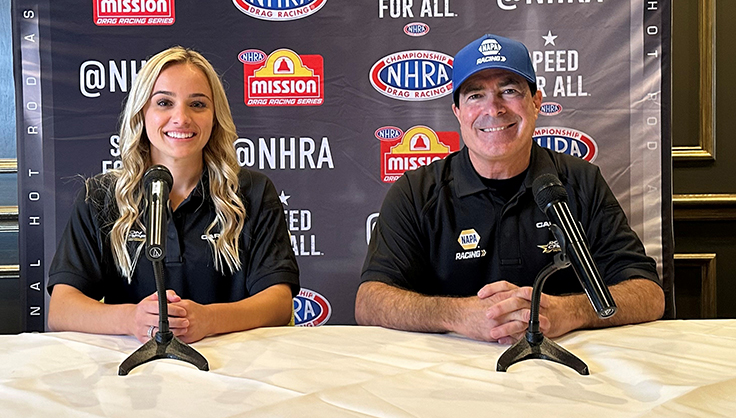
Now I'm always thinking, "What can I do for Carlyle? What can I do for Monster? What can I do for NAPA? What can I do for Ron Capps Motorsports? What can I do for our team?" I'm always trying to capitalize on every opportunity, whether it's social media or driving.
But honestly, I think I've always had that mindset. Before this, Macie and I owned our manufacturing company. We were always asking ourselves, "How can we make more money? How can we grow our business? How can we gain more customers at the races?" My family has always taught us to try to be 1% better every day. The mindset hasn't changed — it's just focused on different things now.
Has the fan response surprised you more than anything else?
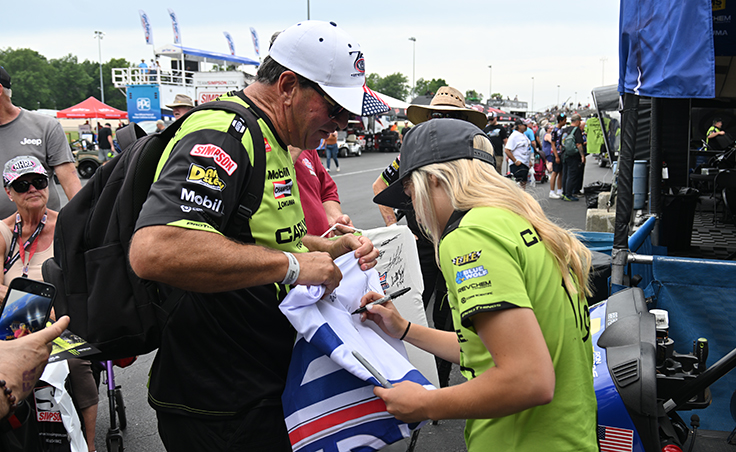
Absolutely. My favorite thing is coming out on Friday and seeing a couple little specs of green Carlyle shirts along the ropes. Then Saturday, there are a few more. By Sunday, it's like a green monsoon. Everywhere you look there are green shirts.
That's exciting not just for our team, but for Carlyle. They took a huge chance on me. They named me their Top Fuel driver before I had ever hit the throttle. I'd only done a couple of interviews, and they made me the face of their brand.
Pretty much everybody already knew NAPA, but Carlyle wasn't nearly as well-known. Now people are embracing our team, our sponsors, and everything we're doing. That makes me incredibly proud.
Fans and the media have even started calling it "Maddi Mania," and given you the nickname "Maddi the Baddie," but you and your team have resisted capitalizing on the hype.
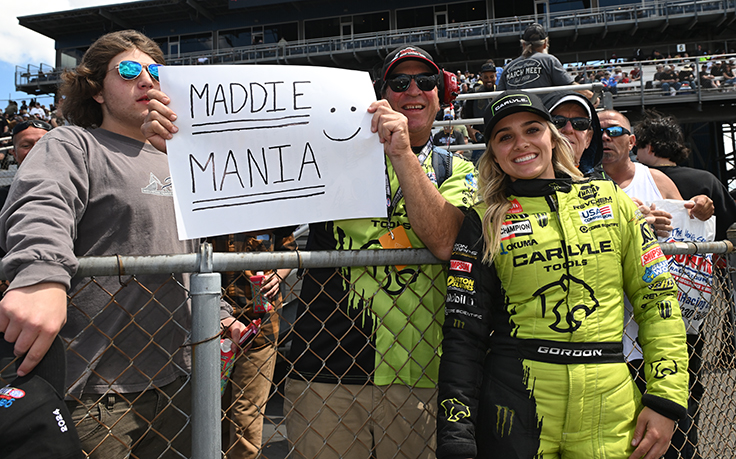
From the beginning, Ron, Carlyle, and NAPA wanted to keep as much pressure off me as possible. Obviously, there's pressure, but like someone once said, "Pressure is a privilege." Ron didn't want it to seem disrespectful to the other Top Fuel drivers. He felt like if all these nicknames started immediately, people might think, "She just got here."
He kept telling me I needed to prove myself. We won some rounds, had some good interviews, but you don't become the face of a sport after one race. You have to earn it over time.
I'm really happy he handled it that way because I never want to come across as cocky. That's just not who I am.
Your fan base seems to include just about everyone. What do you see when you look out at the ropes?
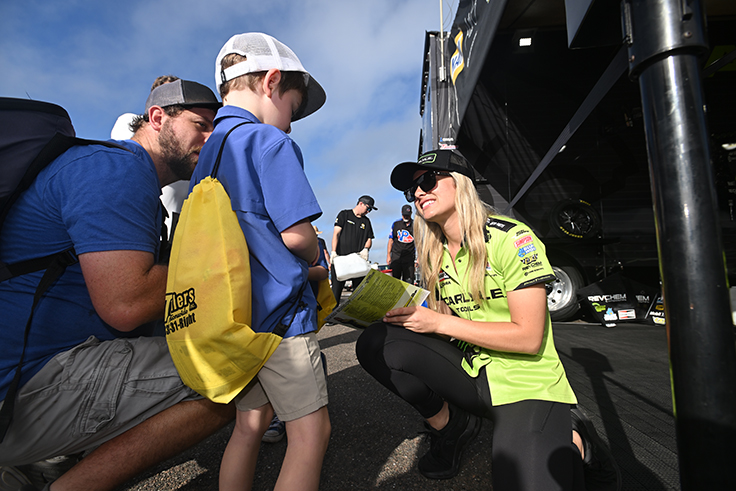
Honestly, everybody. There are a lot of young kids, teenagers, and families, but it's truly all ages. Grandparents bring their grandkids. Fifty-year-old men come over for autographs. There are people walking with walkers. Twenty-year-olds. Thirty-year-olds. Everybody.
One story that has stayed with me is a young girl named Sammy. She started following our family when I was driving Alcohol Funny Car. She wasn't interested in racing until her dad showed her videos of my sister and me working on our race cars. Now she races with her dad. She builds engines. She works on race cars because of watching our family. That's incredibly meaningful to me.
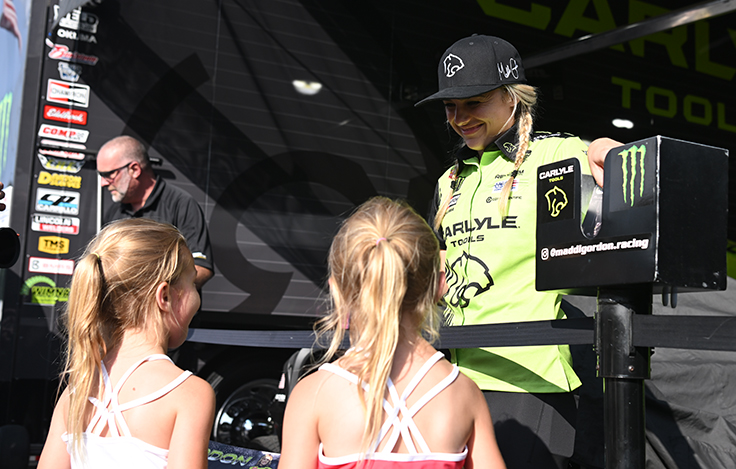
Kids tell me they want to be like me someday, but honestly, I don't see myself as any different than anyone else. I have regular people problems. I do normal things. I just happened to get an amazing opportunity to drive this race car and represent these sponsors. I've even had people tell me they couldn't believe they were standing next to me because they watched me on TV. I always tell them, "I promise you I'm just as real as you are. I'm not any more special. I just get to drive this really cool race car."
The thing I'm most thankful for is I get to be myself. I get to talk about race cars and say whatever's on my mind. I don't have to be somebody I'm not.
So becoming a role model probably wasn't something you ever expected either.
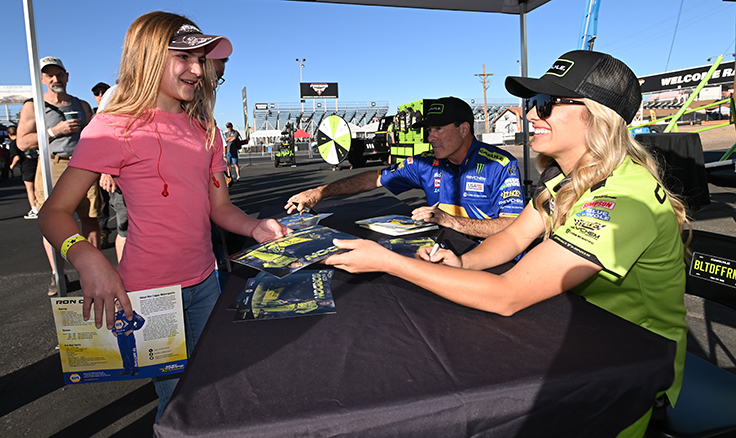
Gosh, no. But I've always wanted to represent myself well. Even growing up, I always wanted to be a good kid. My family owned a cabinet shop in a small town, and our entire business was built on word of mouth. Macie and I always took pride in our family's name, whether we were at school, in the grocery store, or out with friends.
Now it's on a much larger scale, but it's really the same thing. I want to represent myself, my family, our sponsors, and our partners well. People tell me I'm their role model, and I laugh because I still barely know how to do my own taxes. I still have so much to learn. But I take a lot of pride in hearing that.
Before Gainesville, was there ever a point where you wondered if you could really drive a Top Fuel car?
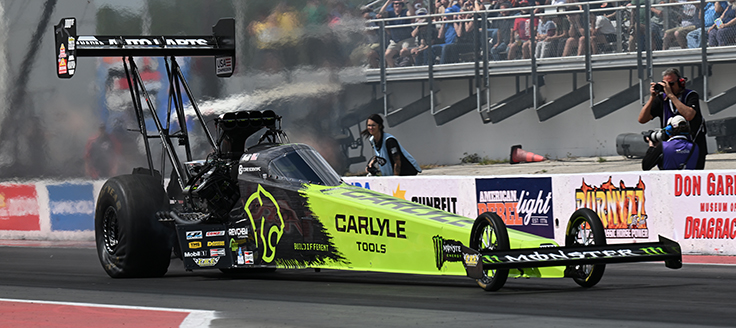
Oh, for sure. Absolutely. Going into Gainesville, I had never warmed up a dragster, never driven one with a blower on it, and never driven anything with nitro. I grew up watching Top Fuel cars my whole life, and you look at them and think, "How in the heck is somebody surviving one of those race cars?"
The Monday night before we tested in Gainesville, my parents and I were sitting together, and I hadn't been sleeping for weeks. I was so nervous. Excited, but nervous. I just kept asking myself, "Can I do this?"
We had spent more than a year going around with me announced as the Carlyle Tools driver for Ron Capps Motorsports, and I still hadn't even hit the gas. It was really my family that gave me confidence. They kept reminding me that I had them, I had Ron, and I had a great team around me. But honestly, it was Ron's confidence in me that really gave me the confidence to get in the car.
I kept asking him about testing: How much I would need, how long it would take, and he just kept saying, "I'm not worried."
I said, "You're not worried? I'm worried."
He said, "No. If you can drive that Alcohol Funny Car, you can drive this Top Fuel dragster straight." He put so much on the line for me that it gave me the confidence I needed. But yes, I absolutely had doubts.
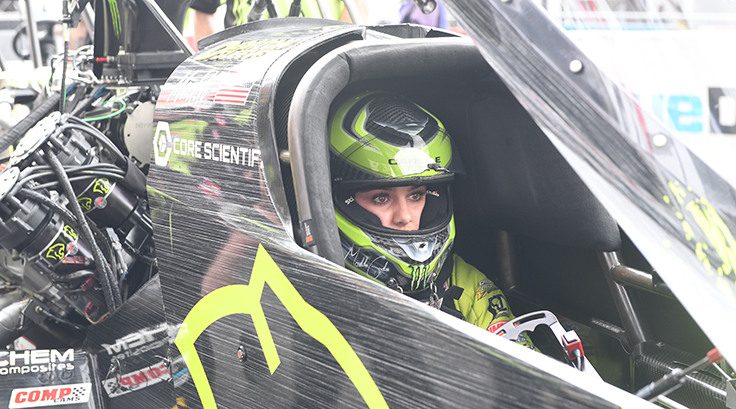
Even after I got in the car, it was a lot to handle. There was a point during licensing when I kept lifting before I got to the part of the racetrack where the clutch really locks up and starts pulling the big G-forces. I kept feeling cylinders dropping out, and I thought, "I can't drive this thing with cylinders out." Mentally, though, I started wondering, "Maybe I'm just scared. Maybe I can't stay in the gas."
Fortunately, I had wonderful people around me who helped me get through that mental hurdle, and the next day I got my license.
It's definitely been a lot, but it's been a lot in a great way. It hasn't been overwhelming because Ron really prepared me for this side of things: the media, the fan interaction. By no means did we expect it to become what it has. The fan interaction is light-years beyond anything we could have imagined, but Ron spent a lot of time helping me understand what to expect.
I feel like I was as prepared as I could have been, but the fan interaction is absolutely insane and far beyond anything I ever imagined.
How much did your experience in Top Alcohol Funny Car prepare you for Top Fuel?
Oh, heck yeah. I can't even imagine trying to drive one of these Top Fuel cars without first driving an Alcohol Funny Car.
It wasn't just the driving. My family gave Macie and me the opportunity to learn every mechanical part of the race car: how the clutch works, the fuel system, the pistons, everything. Learning the race car from the crew side made me a much better driver because I understood what the car was doing.
Then there was the Funny Car itself. Those things are just so gnarly. The shifting, the precision — you have to be perfect. My family put me through every procedure imaginable. Two-step procedures. Rev-up procedures. Shifting without a shift light. Dad never let me take the easy way.
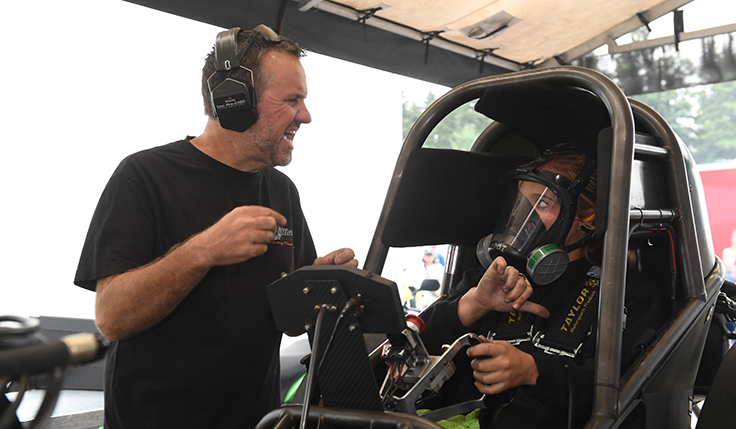
He always told me, "If you rely on a shift light to drive this race car, then you don't deserve to drive it."
I'd point at other drivers and say, "Dad, they've got two shift lights."
He'd say, "Doesn't matter. Learn to drive the race car. Listen to it. Know where you are on the racetrack. Understand what's happening. Then use the shift light as a reference."
That was just how my family taught us. Take the hard route first. Learn it the right way. Looking back, I'm incredibly grateful because I think it made me a much better driver.
Many people who have driven everything from Alcohol Funny Car to Top Fuel say Alcohol Funny Car is actually the hardest car in drag racing to drive. Do you agree?
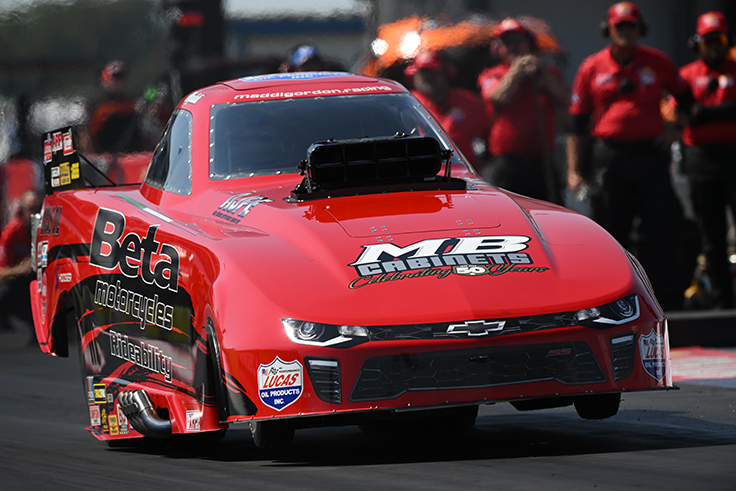
I do. In my opinion, from the starting line to about 500 feet, the Alcohol Funny Car is harder to drive. To make horsepower, you've got to carry the front wheels. They'll stay up for 100 to 150 feet, and when they come down, the car almost always bounces one direction or the other.
Then you've got to make the first shift, and it comes so quickly because the engine accelerates so fast. That shift upsets the car again, so now you're trying to get it back in the groove before making the second shift. Once it's in high gear, if everything is OK, you're usually in pretty good shape.
The Top Fuel car is different. There's actually less to do on the starting line. When you hit the throttle, the front end comes up and sets back down almost immediately, so I feel like I can drive the car where I want during the first part of the run. But once the clutch locks up, that's when all hell breaks loose.
That's where Top Fuel becomes harder. Everything happens so fast, and the tires are never completely attached to the racetrack. They're always spinning, always moving around. That's when the car really starts trying to go wherever it wants to go.
That's where I think Top Fuel becomes the more difficult race car.
With about 50 or 60 runs under your belt now, are things starting to slow down?
I think so. I still have a lot to learn, but I'm able to relay more information to Rob [Flynn] and Troy [Fasching] now.
One qualifying run recently, I felt the car start shaking before it smoked the tires. I told them exactly where I would have pedaled it in eliminations. Rob kind of looked at me sideways and said, "You think you could have caught it that early?"
When I explained what I felt, they were thrilled because they already thought I had reacted quickly. Those little moments give me confidence that I'm becoming more in tune with the car.
Earlier this year, one of your goals was simply reaching the point where Rob and Troy weren't correcting you anymore. Are you there now?
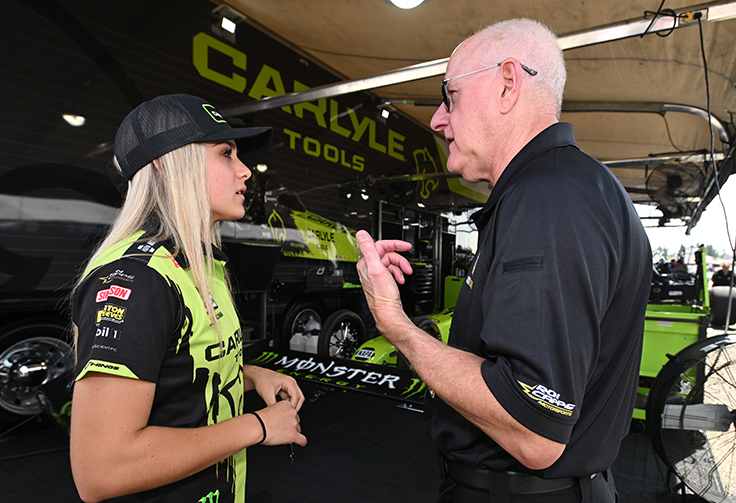
They're wonderful to work with. I definitely still have things to work on, but they've spent so much time helping me become the best driver possible.
They were really happy with my pedal job in the semifinals, and that made me incredibly happy because that was a personal goal — to win a round on a pedalfest. Obviously, I stayed in it too long and was late on the chutes, but you can't be perfect in one run.
How about reaction times? Looks like there's still some work to do there ...
That's absolutely an area where I want to improve. I don't want to be stuck in the .070s. I want to be in the .060s and better. I was mostly low-to-mid-.070s all weekend. That's not terrible, but I want more. I want to be consistently in the .060s. The trick is not focusing too hard on it. Guido [Dean Antonelli] told me that if you're trying to react, you can't think. Your brain can only do one thing at a time.
Do you put pressure on yourself to eventually be as good on the Tree as Justin Ashley or Shawn Langdon?
Absolutely. I don't want to strive for mediocrity. I want to be like Justin Ashley. I want to be like Shawn Langdon. I want to be the person people line up against and think, "Man, I'd better be on my game."
I don't want anyone excited to race me because of my reaction times. That's definitely not my goal.
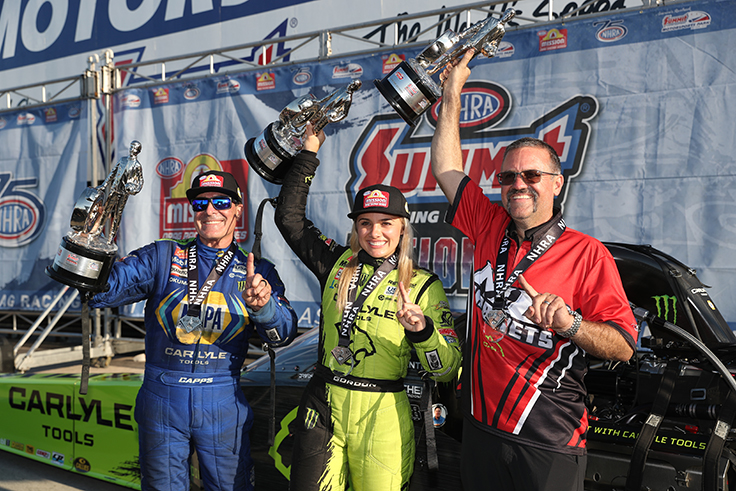
Let’s jump ahead to Norwalk. Your dad won ahead of you, and then Ron won. What was going through your mind waiting for that final round as you're ready to race Antron Brown?
Before my dad won, I sent everyone texts like, "Good luck, go kick some butt, and try and start the trend for us." But he's racing Sean Bellemeur, who hasn't lost a round all year long. I didn't get to watch his run, and Ron comes over and says, "Hey, your dad won," and I just freaked out, like, how exciting, right?
And then to have Ron and I in the final, and for us to be running Antron Brown, a four-time world champion. He always cuts great lights, and they've got a great car, but we've got a great car, too. I had all the confidence in our team, but rolling up into the staging lanes, and my family was there when I was getting dressed and getting in the car, and seeing my dad have the winner's medallion on his neck, I wanted that so bad.
I was in the water box when Ron ran, and it was a good race, and I saw Ron's whole team celebrate. I watched Guido do his interview; I watched Ron celebrate at the top end on the Jumbotron, and I watched him do his entire interview. I was so, so happy for Ron, but at the same time, I'm like, "Man, this is just too perfect. There's just no way that it could be this perfect if all three of the cars win."
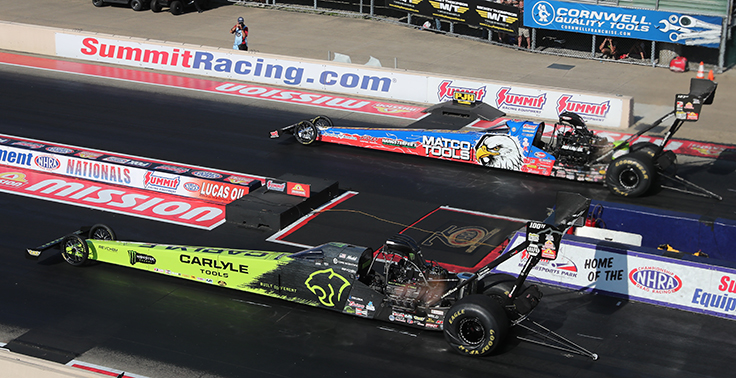
When the car does fire up, I really can tune everything out and just stay focused until I was backing up from the burnout, and I was thinking, "Man, I really want to win this race," but as I get back from the burnout, it was like, "OK, calm down, Maddi; nothing good is gonna happen if you don't just stay focused," and I was focused from there on out. I thought I had a pretty decent light, and I didn't hear Antron, so I knew that was a good sign.
Man, I was just staring straight at that win light on the wall, just hoping that thing came on, and, oh my gosh, when the win light came on, I can't believe that I didn't jump out of the car at 300 miles an hour. It was absolutely insane, because everything that we, the whole team, has done for just so many months in the offseason, and all the hard work, it's like all the hard work is just shown in that one little light, and it's just the most exciting, best feeling in the world.
What else made victory so special?
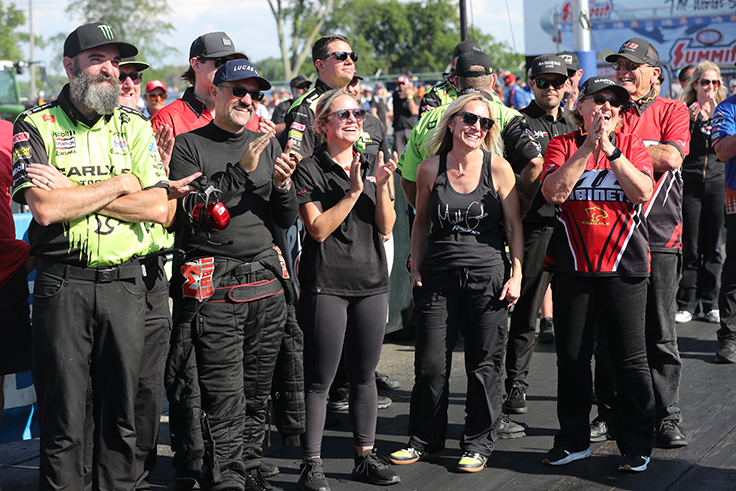
Seeing the starting-line reaction. My family, my team, the NAPA guys — everyone celebrating together. Then seeing Ron and his team celebrating downtrack. That's another part of my family. And then there was a fan video from the grandstands. When the win light came on, everybody was on their feet, screaming and waving. I'd never seen anything like it. The fans have been incredible.
Your family is obviously incredibly important to you. What’s it been like to see your dad driving again and to see Macie's success in Top Dragster this year?
It's wonderful. When all this started, Dad wasn't really that excited about getting back in the car because he genuinely loved coaching me. He enjoyed being on the sidelines. Then about six months before his return, he started getting the bug again.
Seeing him back in his happy place has been amazing. Driving an Alcohol Funny Car is just part of who my dad is.
How has Macie handled everything as your profile has grown?
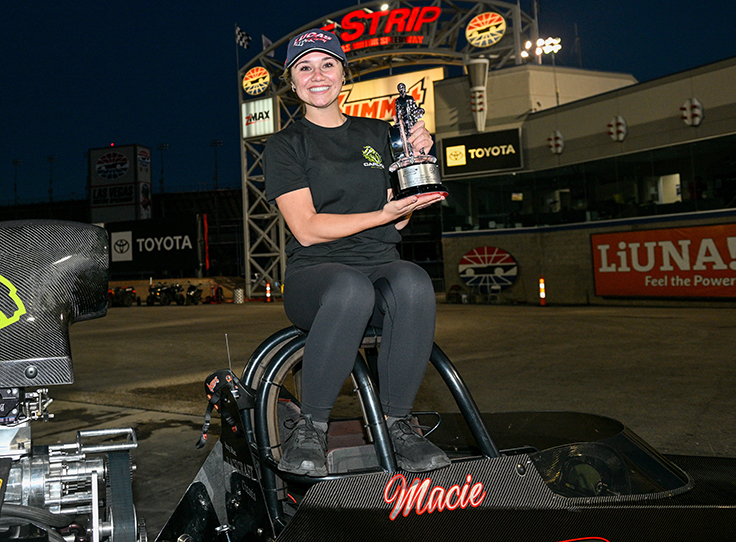
Honestly, that's something that gets overlooked, and I think that's something that is really admirable of her, because we did everything together. We were a joint person, and everything we did, we did it together, then all of a sudden, slowly it started shifting to just me, and then just blew up, and — and I mean in full honesty — there is no jealousy. She is so happy for me, and I think a lot of it is because she doesn't even want to be where I am. She doesn't want the fame, she doesn't want the publicity, but I always try to support her whenever I can, go to the races when I can to watch her, because our relationship is really special.
Considering everything you've accomplished, how do you stay humble?
I've always admired great drivers who are humble. To me, they seem 10 times better than those who aren't. The thing about drag racing is that as soon as you think you're on top of the world, one little mistake can change everything. As my papa [grandfather Mike] says, "You can go from the penthouse to the outhouse very quickly.” That's why I've always wanted to stay humble.
Okay, brag a little. Who were some of the coolest people who texted you after the win?
Alan Johnson and Brian Husen both texted me, which absolutely blew my mind because I didn't even have their phone numbers. That means they had to go ask someone for my number. I got a text that said, "Hey, Alan Johnson here," and I had to do a double-take. John Medlen reached out, too. Those were probably the three that stood out the most.
It's been that kind of year for you ...
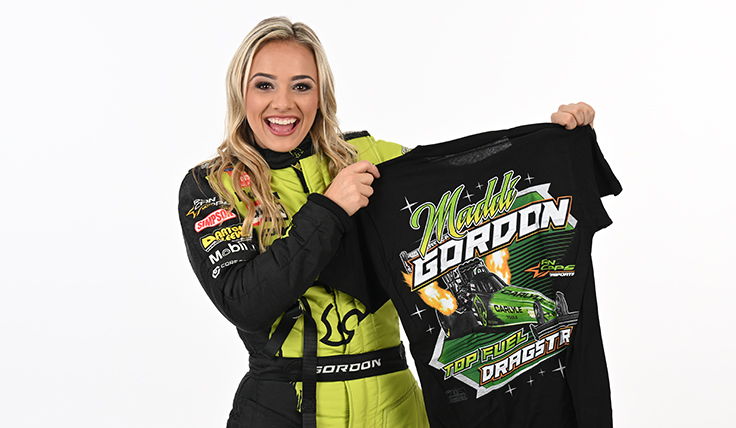
Honestly, coming into this year, everyone asked, "What are your expectations?" If you would have told me halfway through the year I would have a diamond Wally, and be fourth in points and have the fan interaction we have, I would have been very polite and said, "Oh, that's very nice of you, but no way," because it's so difficult to win in one of these classes, especially with the Kalitta cars and the way they're running. They're monsters, and they don't go away. Every single weekend, they're just so dang good, and they don't mess up, and you have to be absolutely perfect to beat them. I've got all the confidence in the world in our team, and I go into every single race day knowing that we have a great race car, and I trust, you know, Rob and Troy 100%, but the lead that Langdon and Kalitta have in the points, it's just, it's pretty monumental, and what they've been able to do, so to be able to go through one of their cars to get this win makes it just that much sweeter.