

-
Behind the Scenes with the winners of the 2026 NAPA Auto Parts Midwest Nationals
-
Weekend Rewind: 2026 NAPA Auto Parts NHRA Midwest Nationals
-
Saturday in St. Louis: NAPA Auto Parts NHRA Midwest Nationals photo gallery
-
Could St. Louis bring out the best in Erica Enders once again?
-
Cameron Ferre: Still chasing Top Fuel greatness, just on his own terms
-
-
Ron Capps thinking big at NAPA Auto Parts NHRA Midwest Nationals
-
Top Fuel’s Shawn Langdon looking for fourth straight win of 2026
-
Behind the Scenes with the winners of the 2026 NHRA Nationals at The Rock
-
Weekend Rewind: The inaugural NHRA Nationals at the Rock
-
Five Things We Learned in Rockingham
-
New venues like Rockingham bring excitement for old pro Ron Capps
-
That was then, this is now: The Winston Invitational at Rockingham
-
After a near-miss in Michigan, Ingwersen and crew are more inspired than ever
-
Jordan Vandergriff relishes first opportunity to race at Rockingham Dragway
-
Behind the Scenes with the winners of the 2026 Dodge NHRA Great Lakes Nationals
- ad
-
Weekend Rewind: 2026 Dodge NHRA Great Lakes Nationals
-
Five things we learned from the Dodge NHRA Great Lakes Nationals presented by Mopar
-
Vandergriff and crew took aim at No. 1 in challenging Michigan conditions
-
Friday Photo Gallery- NHRA makes a monumental return to Michigan
-
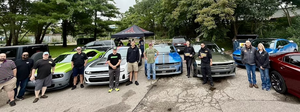
Inaugural Dodge and NHRA Tour de Michigan launches historic race weekend
-
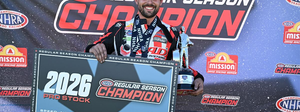
Reigning world champ Dallas Glenn gears up for first Countdown race
-
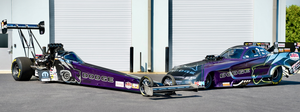
Stewart, Hagan, Pruett reveal new Dodge Charger Super Bee Purple Haze liveries
-
Behind the Scenes with the winners of the 2026 Cornwell Tools NHRA U.S. Nationals
-
Weekend Rewind: 2026 Cornwell Quality Tools NHRA U.S. Nationals
-
Malcolm Phillips makes his Pro Stock Motorcycle return at Indy
- ad
-
No canopy, no problem for Justin Ashley and his crew chiefs
-
Prock Indy three-peat would make U.S. Nationals Funny Car history
-
Howey returns to Indy with his eyes on a Top 10 berth
-
Nataas looks to add to previous Indy success story
-
Outlaw Street's Paige Coughlin looks to add a Wally to extensive family collection
Five things we learned from the NHRA Brainerd Nationals
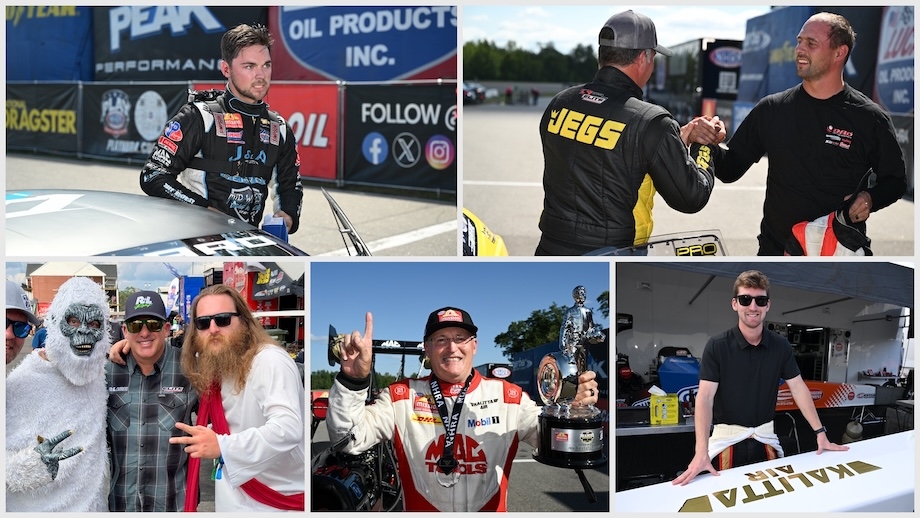
In Brainerd, legendary champions defended their place against a rising generation, drivers demonstrated the power of reaction time, and Kalitta Motorsports showed that its success extends far beyond a single race, car, or championship. We also experienced the characters and traditions that make Brainerd unlike any other stop on the NHRA tour. From hanging out in the pits with Nitro Jesus, Nitro Yeti, and Babe the Blue Ox to Mitch Kalitta accomplishing something his championship-winning father never has, here are five things we learned from an unforgettable weekend at Brainerd International Raceway.
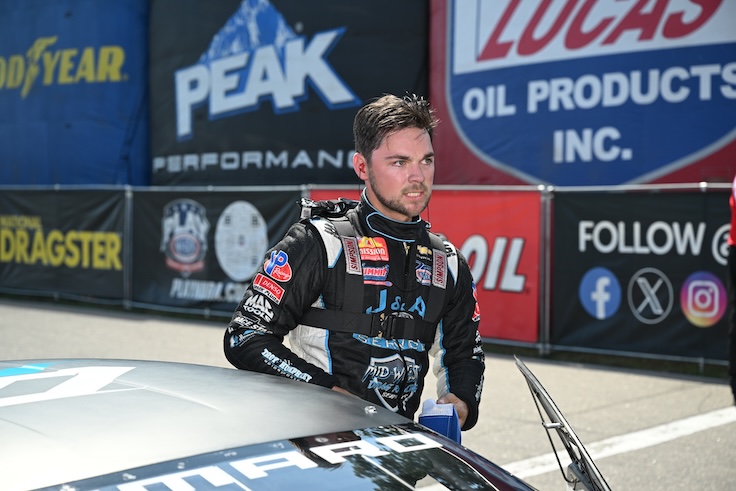
1. Drag racing’s succession begins in the staging lanes
We came tantalizingly close to seeing Greg Anderson line up against his son, Cody, in the Pro Stock final — a literal fight to the finish between one of the sport’s greatest champions and a possible successor emerging from within his own family.
Greg made an especially poignant observation afterward: You never know when your last win will be. That gives the possibility of an Anderson-versus-Anderson final significance beyond a single trophy. Greg is still winning, still contending, and still capable of setting the standard, but Cody’s first semifinal appearance suggested that the next generation is already moving into position.
That is also a metaphor for drag racing itself. The sport is built around long staging lanes that effectively begin at each racer’s pit. Competitors of every age and background feed into those lanes until everyone is ultimately divided between left and right. Then, one pairing at a time, the attention narrows and the spotlight finds you.
You never really outgrow drag racing. You do not simply age out of it, and once it takes hold, it rarely lets you go. The people, families, and traditions remain, even as the state of the art in speed continually evolves. Greg and Cody represent those two realities simultaneously: the champion who is not going to surrender the stage and the successor who is already approaching it.
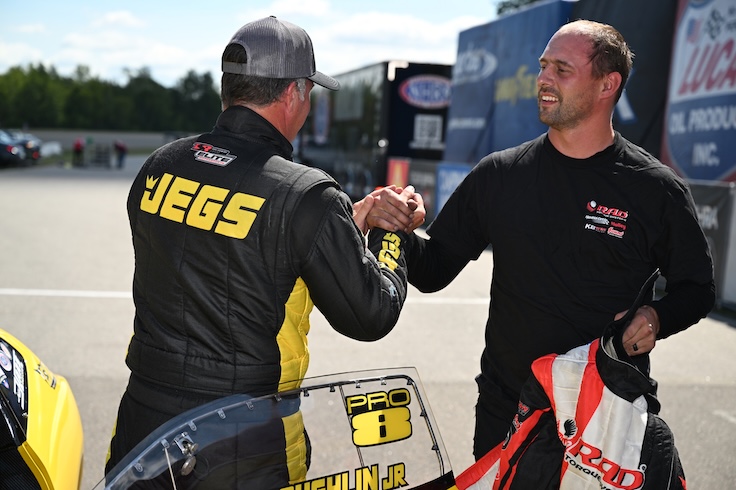
2. Reaction time is human horsepower
Holeshot victories are among the purest expressions of competition in motorsports because reaction time is an advantage every driver in every class has the opportunity to produce. Not every racer arrives with the same budget, engineering resources, horsepower, or data. But when the bulbs begin to fall, the driver can still manufacture an advantage through concentration, anticipation, and nerve. That advantage does not come from the engine shop or the dyno. It comes directly from the person inside the car.
Reaction time is human horsepower. This weekend we saw:
- J.R. Todd over Austin Prock — Funny Car, final-round Mission #2Fast2Tasty NHRA Challenge
- Ron Capps over Cruz Pedregon — Funny Car, first round
- Jeg Coughlin Jr. over Dallas Glenn — Pro Stock, first round
- Troy Coughlin Jr. over Kenny Delco — Pro Stock, first round
- Cody Anderson over Matt Hartford — Pro Stock, second round
A holeshot victory demonstrated how powerful that horsepower can be. A driver can leave with a few hundredths of a second in hand and force a theoretically quicker opponent to chase him all the way to the finish line. Those few hundredths may look almost insignificant on paper, but at more than 200 mph, they can determine careers, championships, and family legacies.
That is why drag racing remains so compelling even as its technology becomes more sophisticated. The machines continue to evolve, but the outcome can still depend upon one person’s ability to respond perfectly to a flash of amber light.
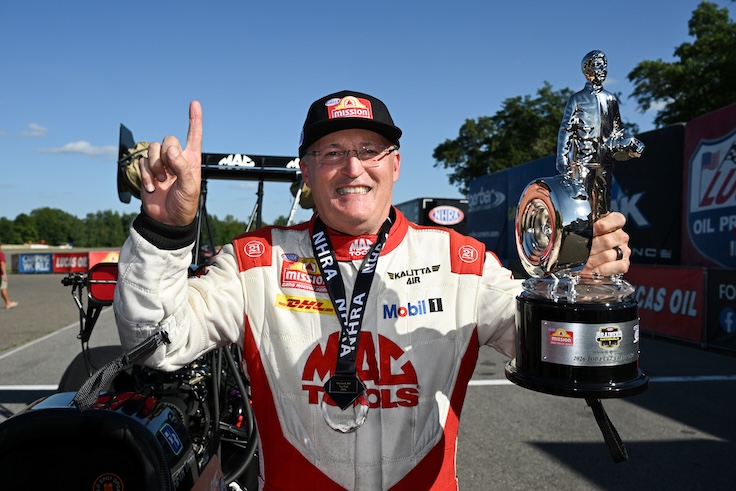
3. Doug Kalitta is in his moment, but the Kalitta story is bigger than one car
Doug Kalitta’s third consecutive victory and fourth win of the season confirmed that he is experiencing one of those special stretches in which confidence, preparation, and performance have converged. Kalitta is not merely winning rounds; he is carrying the unmistakable presence of a driver who expects to be racing late on Sunday.
Alan Johnson’s influence on Kalitta’s car is an important part of that success, but what is happening at Kalitta Motorsports extends far beyond one celebrated tuner and one championship-caliber dragster. The organization’s success is expanding outward, strengthening its people — and strengthened by its people — its processes, and every entry carrying the Kalitta name.
The most revealing evidence may be Shawn Langdon. Even while Kalitta has captured much of the attention with his victories, Langdon has been even stronger in the points standings. That's organizational depth rather than a single-car hot streak. Kalitta Motorsports team has developed an environment in which multiple drivers can contend without one car’s success coming at the expense of another.
Kalitta is unquestionably in his moment, but the larger story is that the entire Kalitta organization may be entering its most formidable eras.
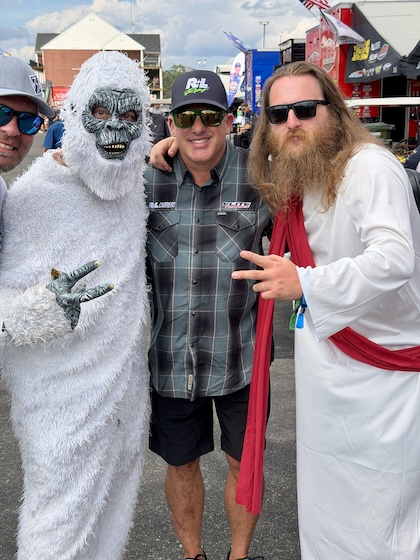
4. Brainerd turns drag racing into American folklore
Brainerd is not simply populated by spectators; it is inhabited by characters.
There is Nitro Jesus, the Nitro Yeti, and the enormous presence of Paul Bunyan and Babe the Blue Ox. Add the citizens of "the Zoo," the costumes, campsites, homemade cars, trailers, and traditions and personalities that seem to emerge only during race week, and the event begins to feel like drag racing’s version of American folklore.
That character matters because Brainerd offers something more memorable than an interchangeable sporting venue. The race has developed its own mythology. Fans do not merely attend; they assume roles within the story and return each year to add another chapter.
Drag racing is already larger than life: impossibly powerful machines, towering header flames, thunderous sound, and drivers who appear to wrestle with forces beyond ordinary comprehension. Brainerd surrounds that spectacle with figures equally exaggerated and unforgettable. It is a place where lumberjack mythology, campground culture, and 12,000-horsepower race cars somehow belong together.
The event works because it does not attempt to domesticate drag racing. It celebrates the sport’s outlier nature, intensity, and wonderful cast of characters.
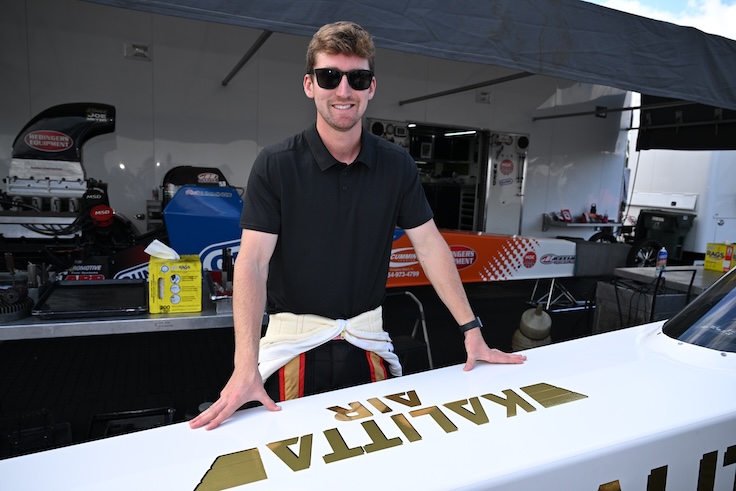
5. Mitch Kalitta has already accomplished something his father never did
Mitch Kalitta’s Top Alcohol Dragster debut carried the obvious weight of his family name, but one number allowed him to immediately create an achievement entirely his own: 0.000.
A perfect reaction time is one of drag racing’s rarest and most satisfying accomplishments. Doug Kalitta has achieved almost everything available to a Top Fuel driver, yet Mitch produced something his father still hasn't. It was a small numerical distinction with enormous symbolic value.
Mitch is not entering the sport merely to imitate his dad. He is beginning his own progression, seizing his own advantages, and establishing his own reference points. His perfect light showed that even on the first pages of a racing career, the weight of his family name is something he has proven he can carry.
That may be the most beautiful thing about generational drag racing. A famous surname gives a young driver access to knowledge and creates tremendous expectations, but it cannot turn on the win light. Eventually, every racer must sit alone in the car, watch the Tree, and respond. For one perfect instant in Brainerd, Mitch Kalitta showed us all that he can do that.