

-
From Dearborn to the dragstrip: Ford Racing's story began 125 years ago today
-
Behind the Scenes with the winners of the 2026 NAPA Auto Parts Midwest Nationals
-
Weekend Rewind: 2026 NAPA Auto Parts NHRA Midwest Nationals
-
Saturday in St. Louis: NAPA Auto Parts NHRA Midwest Nationals photo gallery
-
Could St. Louis bring out the best in Erica Enders once again?
-
-
Cameron Ferre: Still chasing Top Fuel greatness, just on his own terms
-
Ron Capps thinking big at NAPA Auto Parts NHRA Midwest Nationals
-
Top Fuel’s Shawn Langdon looking for fourth straight win of 2026
-
Behind the Scenes with the winners of the 2026 NHRA Nationals at The Rock
-
Weekend Rewind: The inaugural NHRA Nationals at the Rock
-
Five Things We Learned in Rockingham
-
New venues like Rockingham bring excitement for old pro Ron Capps
-
That was then, this is now: The Winston Invitational at Rockingham
-
After a near-miss in Michigan, Ingwersen and crew are more inspired than ever
-
Jordan Vandergriff relishes first opportunity to race at Rockingham Dragway
- ad
-
Behind the Scenes with the winners of the 2026 Dodge NHRA Great Lakes Nationals
-
Weekend Rewind: 2026 Dodge NHRA Great Lakes Nationals
-
Five things we learned from the Dodge NHRA Great Lakes Nationals presented by Mopar
-
Vandergriff and crew took aim at No. 1 in challenging Michigan conditions
-
Friday Photo Gallery- NHRA makes a monumental return to Michigan
-
Inaugural Dodge and NHRA Tour de Michigan launches historic race weekend
-
Reigning world champ Dallas Glenn gears up for first Countdown race
-
Stewart, Hagan, Pruett reveal new Dodge Charger Super Bee Purple Haze liveries
-
Behind the Scenes with the winners of the 2026 Cornwell Tools NHRA U.S. Nationals
-
Weekend Rewind: 2026 Cornwell Quality Tools NHRA U.S. Nationals
- ad
-
Malcolm Phillips makes his Pro Stock Motorcycle return at Indy
-
No canopy, no problem for Justin Ashley and his crew chiefs
-
Prock Indy three-peat would make U.S. Nationals Funny Car history
-
Howey returns to Indy with his eyes on a Top 10 berth
-
Nataas looks to add to previous Indy success story
Five things we learned from the Dodge NHRA Great Lakes Nationals presented by Mopar
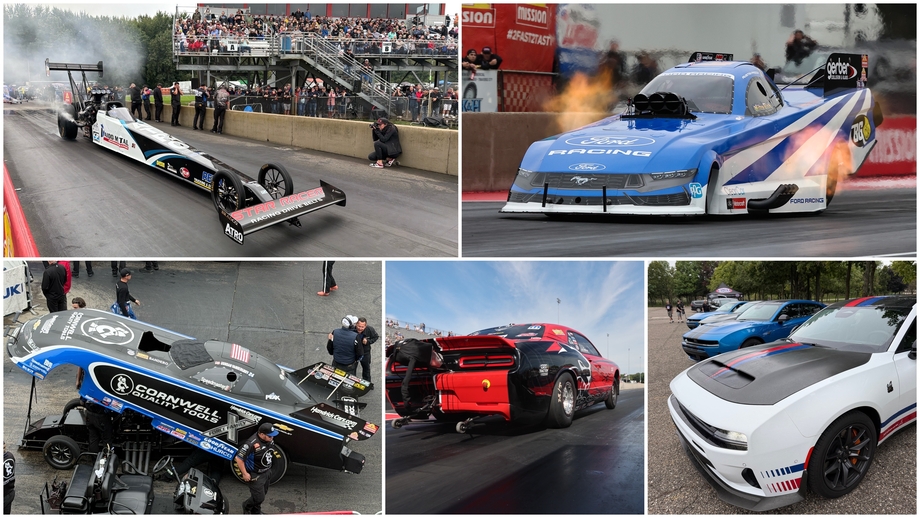
Michigan understands performance in a way few other places on Earth can. Despite challenging weather throughout the weekend, fans filled the beautiful U.S. 131 Motorsports Park and brought with them a deep knowledge of racing, machinery, and the significance of the state’s contribution to automotive history.
The NHRA Mission Foods Drag Racing Series return to Michigan delivered more than memorable performances and packed grandstands. The Dodge NHRA Great Lakes Nationals presented by Mopar revealed something about the state, its people, and the deeply rooted connection between Detroit, performance, and drag racing.
1. Michigan is full of race fans
Here, the automobile is more than a product, and racing is more than entertainment. Generations of Michigan families have designed, engineered, assembled, sold, raced, and repaired the vehicles that shaped American culture. They understand the relationship between building something and proving what it can do. That connection was unmistakable throughout the weekend. Michigan's automotive community is not merely an industry. It is a family and drag racing is part of its shared history. They told NHRA that if we built a race here, they would come—and come they did.
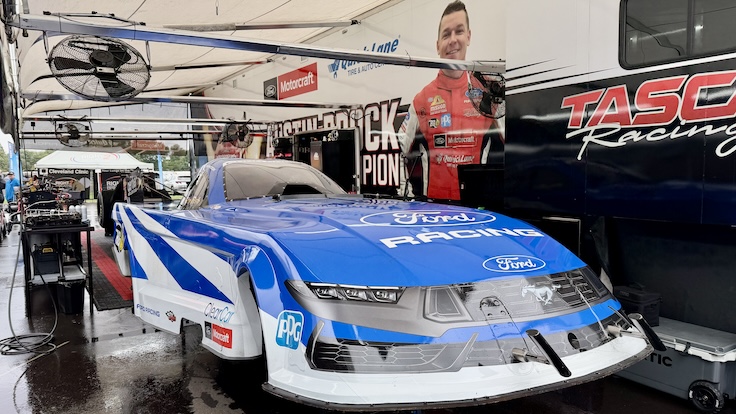
2. Coming home meant everything to Austin Prock
Lansing, Mich., native Austin Prock experienced the weekend differently than almost anyone else.
Speaking in the media center, Prock talked about growing up in Michigan. He joked that everyone sitting on the left side of the grandstands was a member of his family, but there was real meaning behind the humor.
Racing in his home state gave Prock an opportunity to reflect on where he came from and the people who believed in him. He became emotional as he recognized that Ford Motor Company had been his team's strongest supporters an organization that continued to believe in what the team could accomplish even when circumstances looked their bleakest. For Prock, this was more than another race. It was a homecoming and a reminder that racing success is never achieved alone.
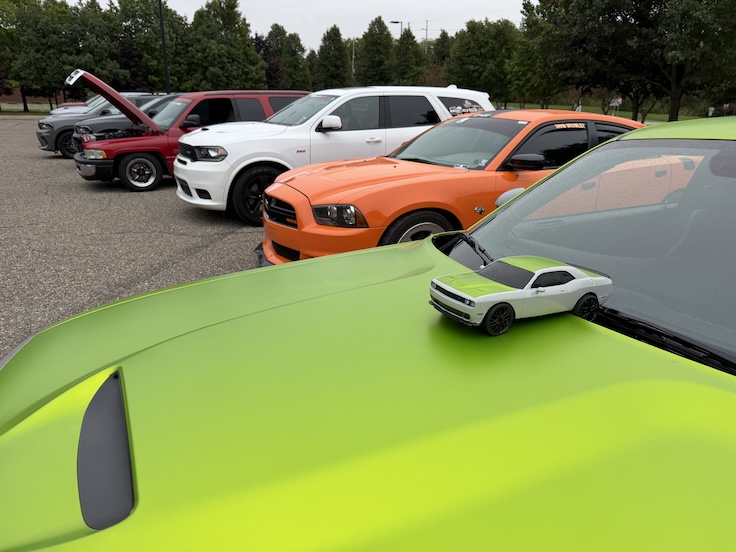
3. Drag racing is an extension of Detroit
Drag racing reflects the qualities that define Detroit: It is powerful, direct, resourceful, and unapologetic. The sport rewards the management of resources, the value of measurable output, and the competitive advantage created by a brilliant system. Every component must contribute. Every person must perform. Every decision must move the car closer to the objective.
Drag racers are not impressed by complexity for its own sake. We do not value exotic solutions simply because they are exotic. We value results. That philosophy connects the starting line to the assembly line. Detroit builds machines, but it also builds systems, teams, and cultures dedicated to producing more power, greater efficiency, and better performance.
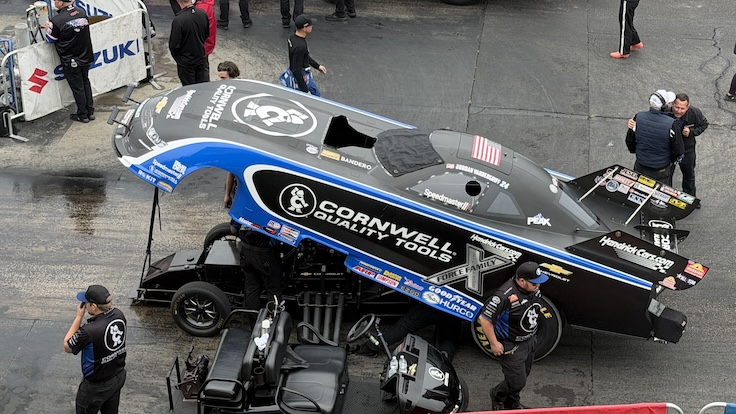
4. If you give up, you beat yourself
Jordan Vandergriff and his team demonstrated something that cannot be simulated during testing or completely anticipated in a race plan—but remains essential to every championship-caliber organization. After qualifying 16th in Funny Car, the team could have accepted its circumstances. Instead, its members rallied. They struggled, challenged one another, and fought with each other—but never against each other.
Their reward came on race day. Though Austin Prock's red-light start removed him from competition, Vandergriff still had to be prepared to capitalize. His team had to make the starting line, execute its procedures, and remain in the fight long enough for an opportunity to appear.
Luck means little if a team is unprepared to receive it. You can be sure Vandergriff's competitors noticed the resilience of this team because they understand how difficult it is to maintain belief when the evidence appears to be working against you. That kind of resilience is supernatural--and scares the heck out of the teams trying to beat you.
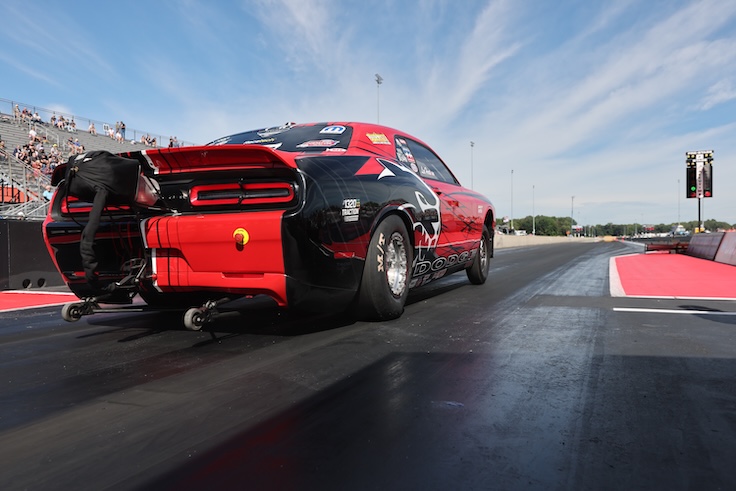
5. Factory Stock Showdown is just getting started
The Mission Foods Drag Racing Series and BS Equipment NHRA Pro Mod Drag Racing Series categories may showcase radically different machinery, but Factory Stock Showdown remains one of the most fascinating heads-up arenas in drag racing.
The near 185+ mph class offers genuine variety among its drivers, engine architectures, manufacturers, and engine builders. Like Pro Mod, it creates room for unexpected winners, new records, and technological ideas to be either validated or dismissed by the timing system.
Nothing is guaranteed. Established programs can be challenged, new combinations can emerge, and meaningful advances can be made with every run.
That made Factory Stock Showdown especially compelling in Michigan the state where many of these race cars were conceived, engineered, and built. It is modern Detroit competition in its purest form: Build it, race it, and let the results determine what works.
The proof arrived immediately when David H. Davies and Lee Hartman rewrote opposite ends of the Flexjet Factory Stock Showdown record book with their Dodge Drag Pak Challengers.
Davies established the fastest speed in class history during the opening qualifying session, reaching 185.7 mph. He returned in Q2 and raised the record again to 186.10 mph, demonstrating that the first performance was no isolated occurrence. The speed was the result of months spent developing the combination, correcting a transmission problem, and refining the tune-up through events in Bristol, Norwalk, and Indianapolis.
Hartman made history from the other direction, recording the quickest elapsed time in Factory Stock Showdown history. Just as importantly, he followed the record-setting pass with another strong run, confirming that the combination was repeatable.
The performances demonstrated what makes Factory Stock so compelling. The records came from strong atmospheric conditions, an excellent U.S. 131 racing surface, NHRA's continued work to maintain parity, and teams that knew how to combine established data with an immediate opportunity.
"We did swing for it," Hartman said.
That willingness to attack the racetrack mattered because competitors had only two qualifying sessions before a compressed eliminations schedule. Conservative thinking might have secured a place in the field, but it would not have advanced the category.
Davies’ team used its accumulated data and familiarity with U.S. 131 to pursue speed. Hartman credited the relentless work of the Stanfield team, whose members continued improving the car at the shop and the racetrack. One program produced the class's fastest pass; the other produced its quickest.
Together, they captured the essence of Factory Stock Showdown: production-based American performance developed through ingenuity, preparation, and competition. The fact that both records were established by Dodge Drag Pak Challengers in Michigan the home of the American automobile made the accomplishment especially appropriate.
This is where Detroit's theories are tested. The stopwatch does not care about reputation, marketing, or expectation. It recognizes only results and in Michigan, Davies and Hartman moved the entire category forward.