

-
Five Things We Learned at the Texas NHRA FallNationals
-
After fourteen years, GT Tonglet returns to Pro Stock Motorcycle
-
Forty years later, Beckman has gone from fan to leading the Funny Car field in Dallas
-
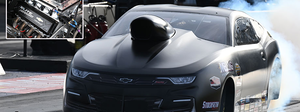
First look at 2027 Pro Stock combination in Dallas exhibition passes
-
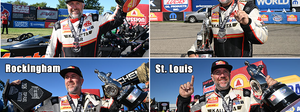
Langdon riding a four-race, 16-round win streak into Countdown's second half
-
-
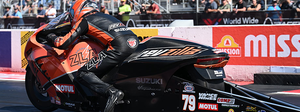
Gaige Herrera eyes Pro Stock Motorcycle championship opportunity in Dallas
-
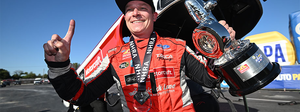
Funny Car’s Austin Prock thinking big for Texas-sized shootout
-
Top Fuel rookie Will Smith looks for dream weekend in Dallas
-
Plourd ready to complete bucket-list challenge with Las Vegas Top Fuel debut
-
From Dearborn to the dragstrip: Ford Racing's story began 125 years ago today
-
Behind the Scenes with the winners of the 2026 NAPA Auto Parts Midwest Nationals
-
Weekend Rewind: 2026 NAPA Auto Parts NHRA Midwest Nationals
-
Saturday in St. Louis: NAPA Auto Parts NHRA Midwest Nationals photo gallery
-
Could St. Louis bring out the best in Erica Enders once again?
-
Cameron Ferre: Still chasing Top Fuel greatness, just on his own terms
- ad
-
Ron Capps thinking big at NAPA Auto Parts NHRA Midwest Nationals
-
Top Fuel’s Shawn Langdon looking for fourth straight win of 2026
-
Behind the Scenes with the winners of the 2026 NHRA Nationals at The Rock
-
Weekend Rewind: The inaugural NHRA Nationals at the Rock
-
Five Things We Learned in Rockingham
-
New venues like Rockingham bring excitement for old pro Ron Capps
-
That was then, this is now: The Winston Invitational at Rockingham
-
After a near-miss in Michigan, Ingwersen and crew are more inspired than ever
-
Jordan Vandergriff relishes first opportunity to race at Rockingham Dragway
-
Behind the Scenes with the winners of the 2026 Dodge NHRA Great Lakes Nationals
- ad
-
Weekend Rewind: 2026 Dodge NHRA Great Lakes Nationals
-
Five things we learned from the Dodge NHRA Great Lakes Nationals presented by Mopar
-
Vandergriff and crew took aim at No. 1 in challenging Michigan conditions
-
Friday Photo Gallery- NHRA makes a monumental return to Michigan
-
Inaugural Dodge and NHRA Tour de Michigan launches historic race weekend
No canopy, no problem for Justin Ashley and his crew chiefs
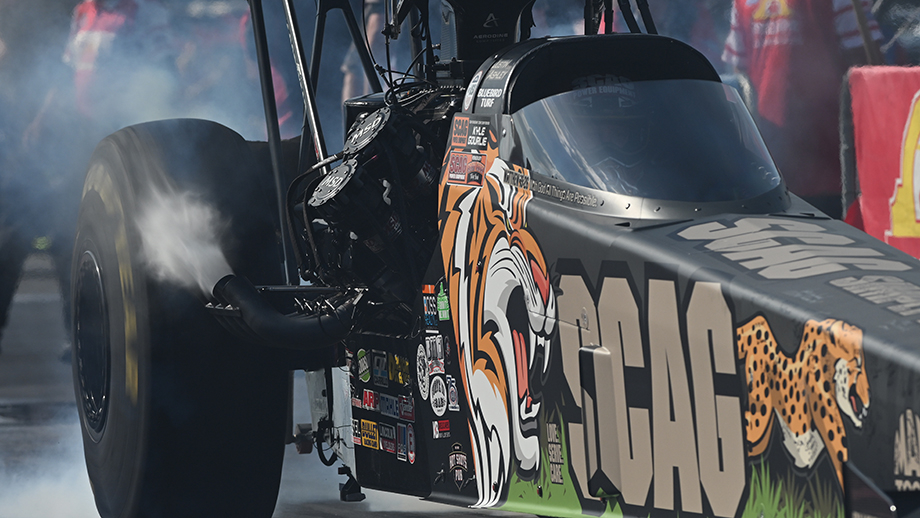
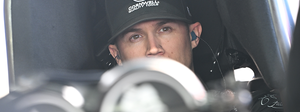
If you’re a Midwest fan and Indy is your first NHRA Mission Foods Drag Racing Series national event since Norwalk, you might do a double take when you see Justin Ashley’s Scag Top Fueler, which is now minus the cockpit canopy that has closed on Ashley since his Top Fuel career began in 2019.
Ashley and crew chiefs Tommy DeLago and Jason McCulloch ditched the fighter-jet-style add-on just before the NHRA Brainerd Nationals in a bid to get back the kind of performance that carried Ashley to the crown at last year’s Cornwell Quality Tools NHRA U.S. Nationals.
DeLago and McCulloch worked with Ashley and team owner Randy Gloede on the decision, which was actually made months earlier but delayed in obtaining the cowling parts necessary to complete the transformation.
As is so often the case in drag racing, the decision was based on weight, and losing the canopy saved the team more than 25 pounds.
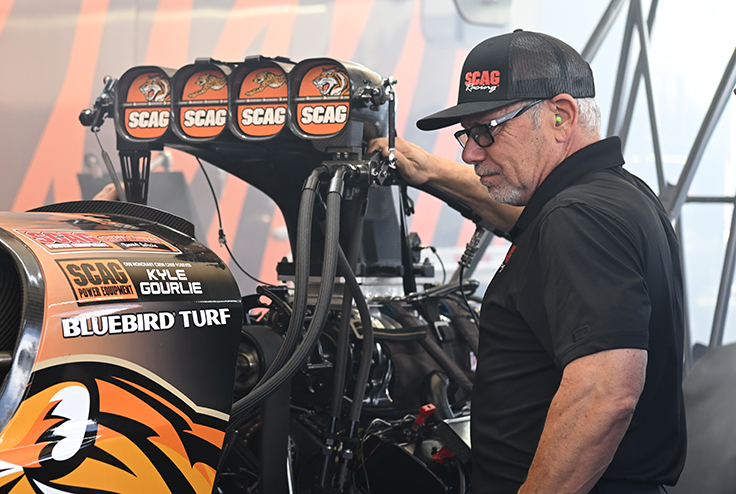
“We know some cars out here that run, and over the winter they were able to get their cars really close to where they're supposed to be weight-wise enough, while we were 50 pounds over [the minimum weight of 2,390 pounds],” said DeLago.
“We've left up the bars for the canopy on the chassis in case we ever want to go back, but if we take those off, that will probably be another five pounds,” added McCulloch.
The team had taken note of the success of the canopied cars of Maddi Gordon and Leah Pruett, both of whom are considerably lighter than Ashley. Although Ashley isn’t very tall, he still weighs in at about 195 pounds of muscular physique due to his workout regimen.
In cool conditions, the extra weight is not as big a deal, but in the summer, and especially here at Indy, where the track is hot, having a lighter car pays off.
“The more weight you have to move at the initial start of the run, the more load there is on the tire,” said DeLago.” It’s just less weight to move. We believe if your car is lighter, it opens your tuning window, especially when the tracks get greasy and warm.”
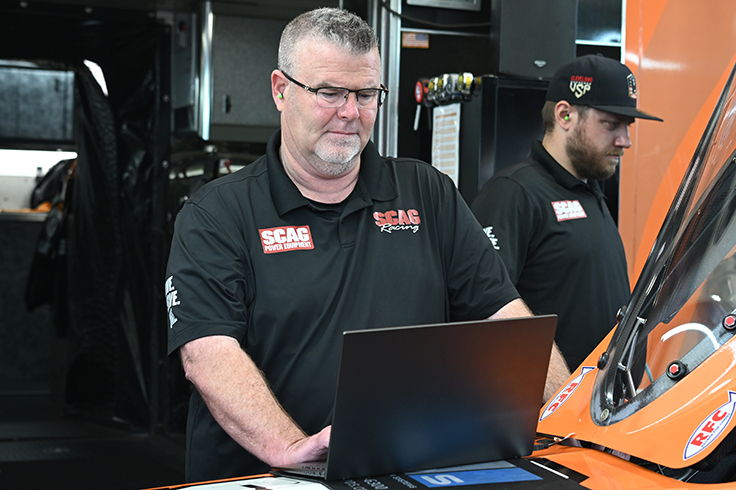
“And the old saying was always 100 pounds is worth a tenth of a second, and we take 30 pounds off our car,” added McCulloch. “You look at the qualifying sheets, sometimes a 3.71 can be third qualifier, but a .3.73 or .74 can be No. 13.”
This is the first year that Delago, who’s been in the biz for more than three decades for the likes of Connie Kalitta, Don Prudhomme, and Don Schumacher, and McCulloch -- the son of Funny Car legend Ed “the Ace” McCulloch who was working on his dad’s Funny Car all the way back to 1987 and spent a lot of time under the tutelage of tuning great Alan Johnson -- have worked together.
“This year has been basically taking a bunch of puzzle pieces and trying to see where they fit till we can, so Jason and I can find out what combination is going to work for the two of us,” said DeLago. ”We've known each other forever, but not working in this capacity. We’re still trying to learn how to communicate with each other.
“It’s taken us a little longer than everybody else to figure out what's going on, where there was a bad batch of clutch discs and a blower program that we had to kind of redo, and we went down a different road. It took us a while, but you have to go a step back to go two steps forward, and it kind of changes the balance of the motor. “
“And then you don't always make the right tuning decision. You add all that up, and it looks like we've kind of struggled. We have struggled, but the pieces are starting to fit together. Since Sonoma Q3, the car's gone down the track a lot. If we were two out of 10 before, it’s flipped now.
“We know, with his reaction times, we’ve just got to get him close and we can’t, or the car doesn’t go down the track, that’s pretty frustrating, and you feel like an asshole because you care about the guys and you care about your driver, and you don't want anybody to lose.”
And how does the driver, probably the one most affected by the removal of the canopy, feel?
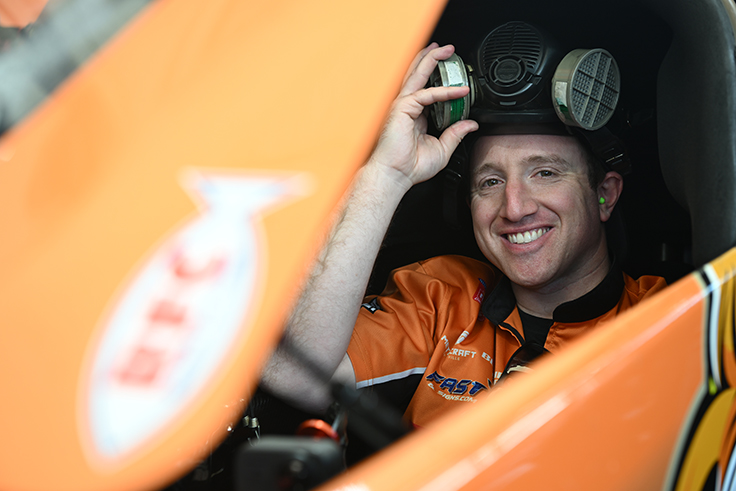
“I feel really good about it,” said Ashley. “It's definitely an adjustment, just because I've never driven an open cockpit Top Fuel car before. Between Brainerd and testing and running here, I’ve got 13 runs without the canopy.
“My goal is that by the end of this event, I'll feel super comfortable going into the Countdown.
“There's pros and cons of the canopy and not. Without it, you can hear the engine, and I do think the visibility is better in terms of it being lighter in the cockpit. When you close the canopy, it gets dark in there, which has benefits in and of itself because I think it blocks the sun a little bit better, but I do think the visibility out of the open cockpit car is a little bit better.
"The first thing was, do we feel comfortable safety-wise with the open cockpit car? We agree that we do. We just think our goal is that it'll open up our window and increase our performance a little bit. And so far, so good.
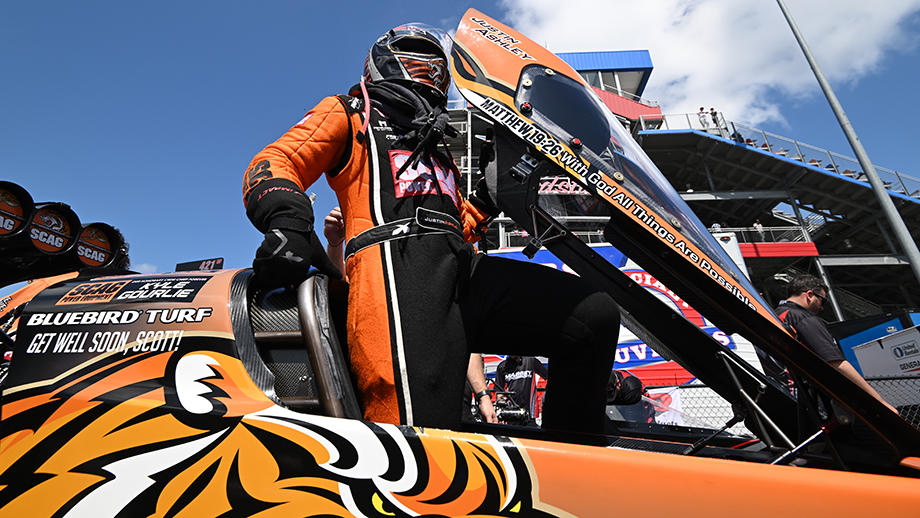
“Your muscles just become accustomed to doing certain things, like even getting in and out of the race car is different. Like, wait a minute, how do I do this? I'm getting used to it, and we're getting used to it as a team. But we’re happy with the way things look 11 runs in.
It's where the weight is, and I'm working on myself to try and lose five or 10 pounds, and I'm getting there, but this was the fastest and easiest way to increase our performance. It's not everything. We're not going to flip a switch, and all of a sudden we're going to go up and be the No. 1 qualifier, but it's another variable, and we want to be at our best when it matters most. So now is a good time to make the switch.”